How to Choose a White Label Agency: Checklist
The right white label agency keeps your client hidden, ships clean under your brand, and holds quality at volume. Here is the checklist to pick one.
Choose a white label agency on three things above all: confidentiality, brand neutrality, and consistent quality at volume. The right partner signs an NDA and never contacts your client, ships deliverables and source files clean under your brand, and keeps a steady team that holds quality as the work scales. Everything else, range of formats, turnaround, communication, and cost structure, matters too, but those three decide whether the relationship protects your client or puts it at risk. This checklist gives you the criterion, what good looks like, and the exact question to ask before you sign.
What is a white label agency?
A white label agency produces work that you sell to your client under your own brand. You keep the client, the strategy, and the margin; the agency supplies the production behind a confidentiality agreement. Your client sees your name on the brief, the drafts, and the final files, and never learns another team was involved.
For creative production, that covers video, motion graphics, graphic design, social ads, and web design and development. You win more work than your team can produce, and a white label partner gives you the output without adding headcount.
What should you look for in a white label agency?
Start with the three fears every agency names, because they are the ones that can cost you a client. Then check range, team ownership, speed, communication, and cost. Here is the full checklist.
| Criterion | What good looks like | Question to ask |
|---|---|---|
| Confidentiality | NDA-backed; works only with you; never contacts or names your client | Will you sign an NDA, and what does it cover? |
| Brand neutrality | Deliverables and source files ship clean, ready to present as yours | Do the files carry any of your branding or metadata? |
| Consistent quality | A dedicated team that learns your brand, not a rotating queue | Who produces my work, and does the same team stay on it? |
| Quality control | A named person checks the work before it reaches you | Who does QC before delivery, the creator or a manager? |
| Range of formats | Full production scope across video, motion, design, and web | Can one team cover every format my clients ask for? |
| Speed | Clear onboarding and replacement timelines, not vague promises | How fast do you start, and how fast do you replace someone? |
| Communication | A dedicated project manager and a shared channel with daily contact | Who is my point of contact, and how often do we speak? |
| Cost structure | One fixed fee, unlimited revisions, flexible term | Is the fee fixed, and can I grow or reduce with notice? |
The rest of this guide takes each fear and each criterion in turn.
Will the agency keep my client relationship confidential?
This is the first test, and it is non-negotiable. A white label agency should sign an NDA without hesitation. Resistance to a confidentiality agreement is a signal to walk away; it usually means the partner wants the option to name your client or show the work later.
Ask what the NDA covers. A strong one binds the agency to work only with you, keeps your client and pricing private, and bars the agency from contacting or approaching your client for any reason. It should also stop them from putting the work in their own portfolio.
Good white label practice cuts both ways, and that is proof you can check. A partner that keeps your relationship private keeps every agency's relationship private. Ask whether they name any of the agencies they produce for. The right answer is no.
Will the work ship clean under my brand?
Brand neutrality is the second fear, and the files are the test. Deliverables and source files should arrive with no trace of the production team: nothing in the artwork, the file names, the exports, or the document properties. You present the work to your client without stripping anything out first.
Ask for the source files, not just flattened exports. You want the working files so your team can make a later change without going back to the agency for every edit. Confirm who owns the intellectual property once the work is paid for; it should be yours to hand over and yours to keep.
Will quality hold once the work scales?
Quality drift is the third fear: the first few jobs land well, then the work slips as volume climbs. The cause is almost always the model. A shared queue hands each job to whoever is free, so no one learns your brand and consistency drops. A dedicated team that stays on your account holds the standard as the work grows.
Ask two questions. First, who produces the work: a dedicated team or a rotating pool? Second, who checks the work before it reaches you? You want a named quality-control step, a creative project manager or art director who reviews against the brief, not the person who made it signing off on their own work.
Then ask about team stability. Room4 Teams runs 60 in-house creatives, mid and senior people who read a brief and get it right. 93% of them stay through to the end of their contract, so the team that learns your brand is still producing months later. If you ever need a change, a replacement starts within three business days.
Can one partner cover every format you sell?
Range decides how much of your pipeline the partner can carry. Many white label providers do one thing: design only, or web only. If your clients ask for video one month and a landing page the next, a single-format partner means managing several vendors and several NDAs.
Ask whether one team covers the full scope: graphic design, motion graphics, video production, social ads, and white label web design and development. A partner with full production range lets you take on more of what your clients need without adding suppliers.
How fast can the agency start and replace people?
Speed separates a partner that publishes real benchmarks from one that promises "fast delivery" and commits to nothing. Ask for specific timelines, in business days, for two things: how long from signing to the first work, and how fast they replace a team member if the fit is wrong.
A dedicated team should start within two business days and replace within three. Ask about turnaround on the work itself too, and expect a straight answer keyed to format rather than a single blanket number.
Who will you actually talk to?
Communication is where most outsourced work goes wrong: slow replies, lost feedback, revisions that miss the point. Ask who your point of contact is. You want a dedicated project manager who runs communication and quality control, not a shared inbox or a ticket queue.
Ask how contact works day to day. A good partner gives you a shared channel, meets you regularly, and keeps you current on where the work stands, so a remote team never becomes a black box. Confirm the tools fit your workflow before you start.
What should the cost structure look like?
Price is the last check, not the first, and the structure matters more than the number. Be careful with a quote that looks unusually low; in production that often means junior output or a model that bills back through scope changes. Ask what the fee includes and whether it is fixed.
A managed white label service runs on one fixed monthly fee that covers unlimited tasks, unlimited revisions, and the full tech stack: all software, all AI tools, and all the stock libraries used on your work. On cost, a dedicated team runs around 45% less than the loaded cost of hiring the same role in-house (salary plus employer taxes). See pricing. Confirm the term and the flexibility: you want to start fast and grow or reduce the team with one month's notice, so you add capacity for the work you won without carrying it when the pipeline quiets.
How white labeling works with Room4 Teams
Room4 Teams produces creative work under your brand as a standing team, not a one-off booking. You brief the work through a dedicated creative project manager who runs communication and quality control; creative direction interprets the brief; the team produces, checks, and delivers on brand and on time. All communication runs through you, and we never contact your end client. If you want the mechanics first, read how white labeling works in creative production.
You choose how it runs. The managed service takes the briefs and returns finished work, from one team member up, on one fixed monthly fee. The integrated option embeds our creative production in your tools. You set priorities and approve the output; we remain responsible for our people, methods, and quality. Either way, the work ships clean under your brand, backed by 60 in-house creatives and Room4 Media's 13+ years in production.
Related reading: white label creative for agencies.
Frequently asked questions
What is a white label agency in simple terms?
How do I choose the right white label agency?
What is the biggest risk with a white label partner?
Should I run a trial before committing?
How fast can a white label agency start?
More on White label

White Label Creative: How It Works for Agencies
White label creative lets your agency deliver design, video, and motion under your own brand. Here is how it works and what to check before you sign.
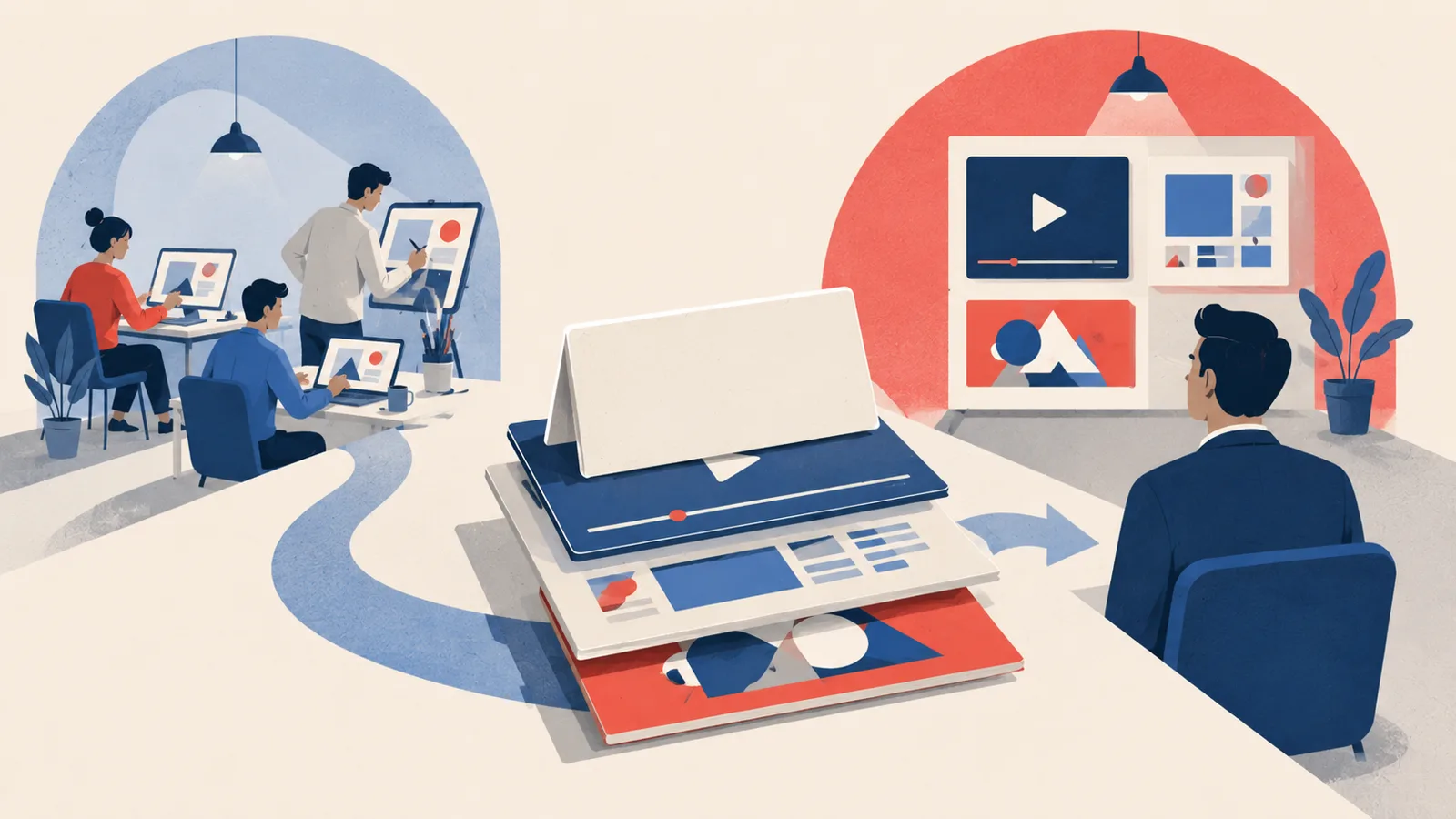
How Does White Labeling Work in Creative Production?
White labeling lets you resell creative work under your own brand. Here is how it works, from the NDA to clean source files you present as yours.