Creative overflow: handle the peaks without a freelancer scramble
Creative demand spikes then falls. Staff for the peak and you pay for idle time. Compare the overflow options and what gives capacity without a scramble.
Creative demand is not steady. It spikes for a launch, a season, or a campaign, then drops back to a fraction of the peak. That leaves you with a hard choice if you only think in terms of hiring. Build a full team around the spike, and you pay for idle capacity most of the year. Build for the average, and you cannot meet the moment when it matters. The companies that handle this well stop treating it as a hiring question and treat overflow as a flex layer: a small core team plus always-on external capacity they can scale up and down without an onboarding scramble. The part that decides whether it works is how you resource that flex layer. This guide covers the options, their hidden costs, and what gives you reliable extra capacity when the peak hits.
Why overflow is a resourcing problem, not a hiring problem
Hiring for the peak means carrying the cost through every slow month. Hiring for the average means that when a launch lands, your one or two people cannot absorb it, and the work spills out to whoever is available. That spill is where the trouble starts, because most companies resource the overflow reactively: a freelancer found at the last minute, an agency briefed in a rush, a contractor hired for a surge that is over before they are fully up to speed.
You can see the pattern in how teams are preparing for it. Creative leaders talk about building a freelance bench for the year ahead, keeping agencies on file for future outsourcing, and assembling vetted rosters so they can brief fast when the spike comes. The instinct is right: you want capacity ready before you need it. The question is which form of standing capacity actually pays off, because each one carries a different hidden cost.
The options for overflow capacity
There is no single right answer, but the trade-offs are predictable.
| Option | What it is | Best for | The catch |
|---|---|---|---|
| Ad hoc freelancers | Individual contractors hired per project | One-off work, a specialist skill, very small teams | A real management load to brief, coordinate, and quality-check; availability is not guaranteed; brand drifts across different hands |
| Vetted bench or roster | A pre-screened pool you maintain year-round, sometimes on light retainers | Recurrent peaks and faster activation than random freelancers | You carry the upfront cost and effort of recruiting, testing, and maintaining the bench before you need it |
| Contract hire | A fixed-term employee for three to twelve months | A known multi-month surge like a launch or rebrand | High fixed cost plus recruitment, and the risk of paying for underused time once the peak passes |
| Traditional agency | A full-service partner billed by project or retainer | Complex campaigns and multi-market work where you want strategy and accountability | Premium pricing, project-management overhead, and scope creep that grows the bill |
| Dedicated team | A standing team that acts as your production arm and scales with your brief volume | High-volume production, versioning, and recurring peaks, for in-house teams and agencies alike | Needs enough ongoing volume to justify a standing arrangement rather than a one-off |
| Design subscription | Unlimited requests on a fixed monthly fee, pause anytime | Steady, predictable output when one or two tasks move at a time | Throughput is capped by a shared queue, so it is not built for several things moving at once |
The hidden cost of the scramble
The reason reactive overflow feels expensive is that the invoice is never the whole cost.
Ad hoc freelancers carry a management tax: the hours your own people spend sourcing, scoping, reviewing, and fixing, which can eat a sizeable share of the budget before you count the work itself. There is availability risk, because the freelancer who was free last month may be mid-project for someone else this month, and dropouts leave you re-briefing from scratch. And there is brand drift, because every new pair of hands interprets your guidelines differently, so the work slowly stops looking like one company.
A bench or roster reduces the activation delay, but you pay for it in advance: someone has to find, test, and maintain that pool during the quiet months so it is ready for the busy ones. A contract hire fixes capacity for a known surge, but you carry salary, benefits, and recruitment, and you risk paying for time you no longer need once the launch is over. None of these are wrong in every case. They are simply different ways of paying for the peak, and the reactive versions usually cost the most in time.
What gives you reliable capacity without the scramble
The capacity that holds up under a spike has four things in common. It is standing, so it is ready before the peak rather than assembled during it. It scales with your brief volume, so a busy week does not mean a new search. It already knows your brand, so the first version lands close instead of drifting. And it runs on your schedule, with production priority, so the timeline is set by your launch rather than by whoever happens to be free. The goal is not to keep a bigger list of freelancers to call. It is to have capacity that is already yours and already up to speed.
How Room4 Teams gives you the flex layer
Room4 Teams is that standing capacity, built as a dedicated team rather than a roster you assemble each time. It is not an agency and it is not a bench of strangers. You get your own team drawn from the talent your work needs: graphic designers, motion graphics artists, video editors, UI designers, web designers, and web developers, working only on your brand so they learn it once and are ready when the peak comes. Because the team is a team and not a single-designer queue, it produces several things in parallel and scales with your brief volume instead of capping at one or two active tasks.
You brief the work and approve it. A project manager and a creative director on the team own the sourcing, the scheduling, the quality control, and the file delivery, so there is no bench to build and no freelancer to chase. The all-inclusive fee also covers the software and AI tools the team needs, stock video and stock photos, unlimited tasks and revisions, and a secure portal, and you receive the source files. Because the team is dedicated to you, you get production priority, so your launch sets the schedule. You have a full team producing within two business days of starting, and a dedicated team runs around 45% less than the loaded cost of hiring the same role in-house (salary plus employer taxes). See what we produce and how it works, or read how to scale creative production without growing headcount and a design subscription versus a dedicated creative team.
Want capacity that is ready before the peak hits? Request rates and we will walk you through it.
Frequently asked questions
How do companies handle peaks in creative demand?
What are the options for creative overflow?
Why is a last-minute freelancer scramble expensive?
What gives reliable overflow capacity?
How does Room4 Teams handle peaks?
More on Creative Production
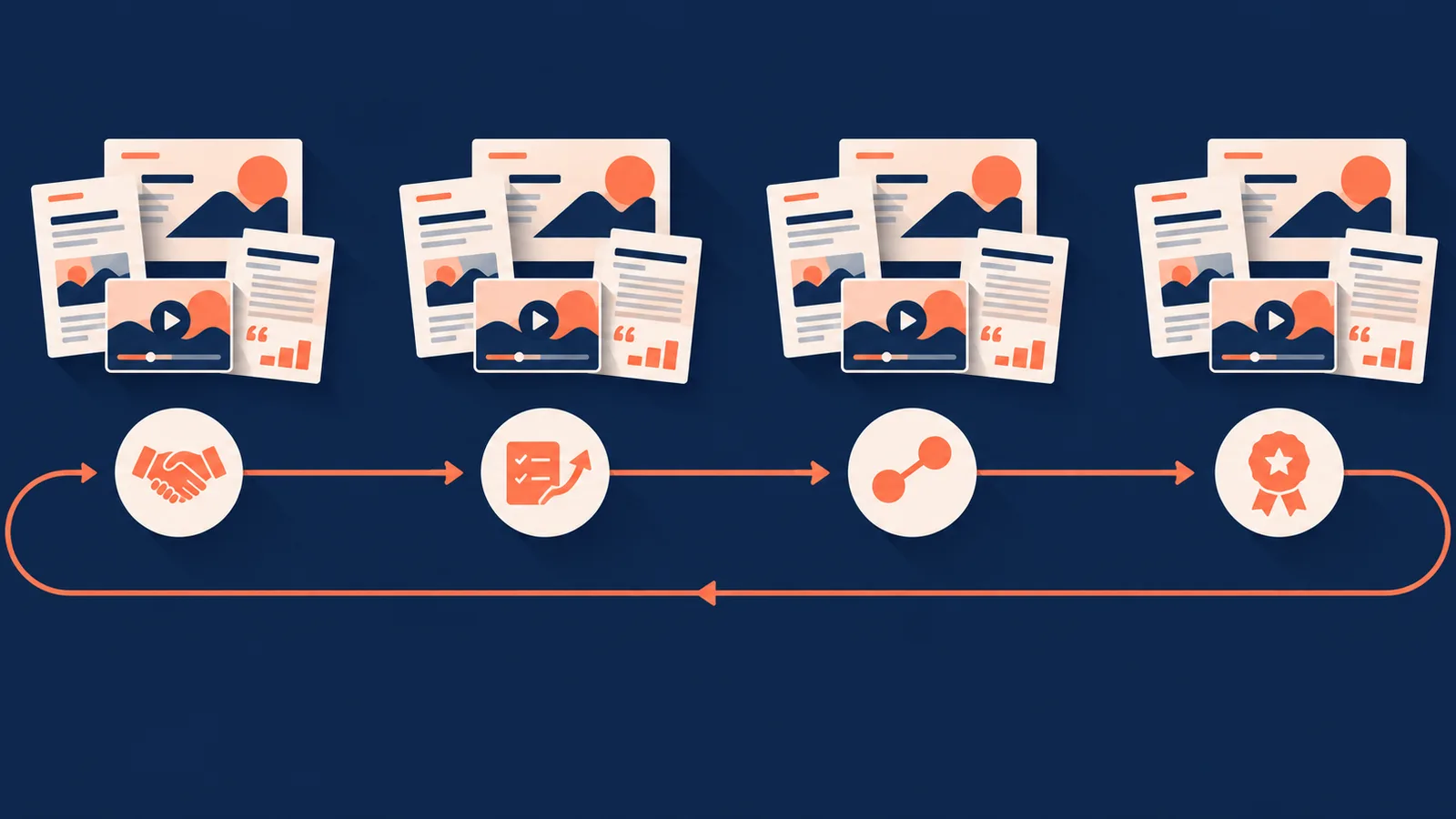
Marketing Collateral Design Services: The Whole Customer Journey
A dedicated team designs your collateral across the whole customer journey: sales, onboarding, referral, and advocacy. What it covers and how to choose one.

Covering a Designer’s Leave or Hiring Gap Without a 12-Month Contract
A maternity cover, a departure, or a launch needs capacity for a set period, not a permanent hire or a year-long contract. The options, and a faster way.

You Hired a Designer. Now They Manage Five Freelancers.
You hired one creative to make the work. Now they brief and chase five freelancers. Why the role drifts, what it costs, and how to get the output back.