You Hired a Designer. Now They Manage Five Freelancers.
You hired one creative to make the work. Now they brief and chase five freelancers. Why the role drifts, what it costs, and how to get the output back.
Look at creative job ads at the moment and a pattern shows up. Companies hire one person, a graphic designer, a brand designer, a motion designer, or a video producer, and buried in the description is a line that the role will also brief and manage outside agencies, freelancers, and production partners.
You hired someone to make the work. Within months they are sourcing vendors, chasing feedback, running handoffs, and doing less of the craft you hired them for. This guide explains why the role drifts into vendor management, what it costs you, and how to get the output without turning your one creative hire into a coordinator.
Why the role drifts into vendor management
You hired one creative to solve an output problem. What you also have is a production-system problem, and the two are not the same. One person cannot cover every format, absorb the peaks in demand, gather the briefs, chase the approvals, and manage a set of specialists at the same time. So the company buys outside help, and because no one is assigned to run that workflow, the one creative hire becomes the default vendor manager.
It happens for a sensible reason. Your hire is usually the person best able to judge a freelancer's work, explain the brand, and turn a vague request into a usable brief, which makes them the natural point of contact. But every outside contributor adds sourcing, scheduling, feedback, file handoffs, and quality control. Internal requests keep arriving from different stakeholders at the same time.
This is a recognizable creative-operations problem, not a failure by the person. Creative operations is the work of running the whole flow, from the incoming request to the finished asset. In one 2025 survey of more than a thousand creative professionals, most reported spending over a quarter of their time on non-creative tasks. That figure is broader than vendor management alone, but it shows how quickly the coordination load grows.
What it costs you
The clearest cost is lost production capacity, even when the outside work is good. If your hire spends ten hours of a forty-hour week coordinating vendors, you have moved a quarter of that person's time away from making or directing creative. Ten hours a week across a working year is around 480 hours, roughly twelve full working weeks. That is an opportunity cost, not a new line on the invoice, but it is real capacity you are no longer getting.
The rest of the cost depends on how the work runs. The agency or freelancer invoice never includes the employee hours needed to brief, review, and integrate what they deliver, so your real spend is higher than the fees suggest. Delivery slows down because work waits on a missing input, conflicting feedback, or an internal approver even when a vendor has capacity. Weak briefs and scattered reviews produce extra rounds of rework.
There is also a quieter cost: role erosion. You keep a capable designer or producer on the team, but you use too little of the craft you hired them for. That is also how good people start looking elsewhere.
One honest caveat. Not every coordination hour is waste. Brand direction, prioritisation, and final approval rightly belong inside your company, and you want your creative lead doing exactly that. The question is not whether your hire touches the outside work at all. It is whether they are making creative decisions or administering everyone else's tasks.
How to get the output without the vendor-management job
The fix is to split two things that usually get merged: owning the direction and managing the production.
Keep one internal owner for the parts that should stay inside: the priorities, the brand judgment, and the final acceptance of the work. Then make your external partner responsible for managing the production, not merely giving you individual freelancers to coordinate. That is the difference that decides whether your hire gets their time back.
A partner that only provides individual contributors leaves the coordination with you. A managed production service brings its own producer or project manager who assigns the specialists, holds the schedule, consolidates the revisions, checks the quality, and delivers organized files ready for your approval.
Do not buy more freelancers for your designer to manage. Buy a production service that manages its own people, methods, and quality and reports to your one internal owner.
How Room4 Teams gives you the output, not another vendor to manage
Room4 Teams is an extension of your in-house team, not a traditional agency or a random marketplace of freelancers. It is a managed production service made up of the specialists your work needs: graphic designers, motion graphics artists, video editors, UI designers, web designers, and web developers.
The difference that matters here is who runs it. The all-inclusive fee includes a Room4 Teams project manager and creative director who own onboarding, scheduling, feedback consolidation, quality control, and file delivery. Your in-house creative keeps the direction, the brand, and the final approval, and stops being the person who chases five freelancers.
Because the same team works on your brand, it learns your standards once instead of being re-briefed job by job. The fee also covers the software and AI tools the team needs, stock videos and photos, unlimited tasks and revisions within the team's production capacity, and a secure portal. You receive production priority and the source files, and can work through Slack or your tools.
The team can start producing within two business days. A dedicated team runs around 45% less than the loaded cost of hiring the same role in-house (salary plus employer taxes). See what we produce and how it works, or read how creative operations actually scales and managing freelancers without the breakdowns.
Frequently asked questions
Why does one in-house creative hire end up managing freelancers?
What does it cost to have a designer managing vendors?
Is managing outside creative always a bad use of a hire's time?
How do you get creative output without turning a hire into a vendor manager?
How does Room4 Teams handle this?
More on Creative Production
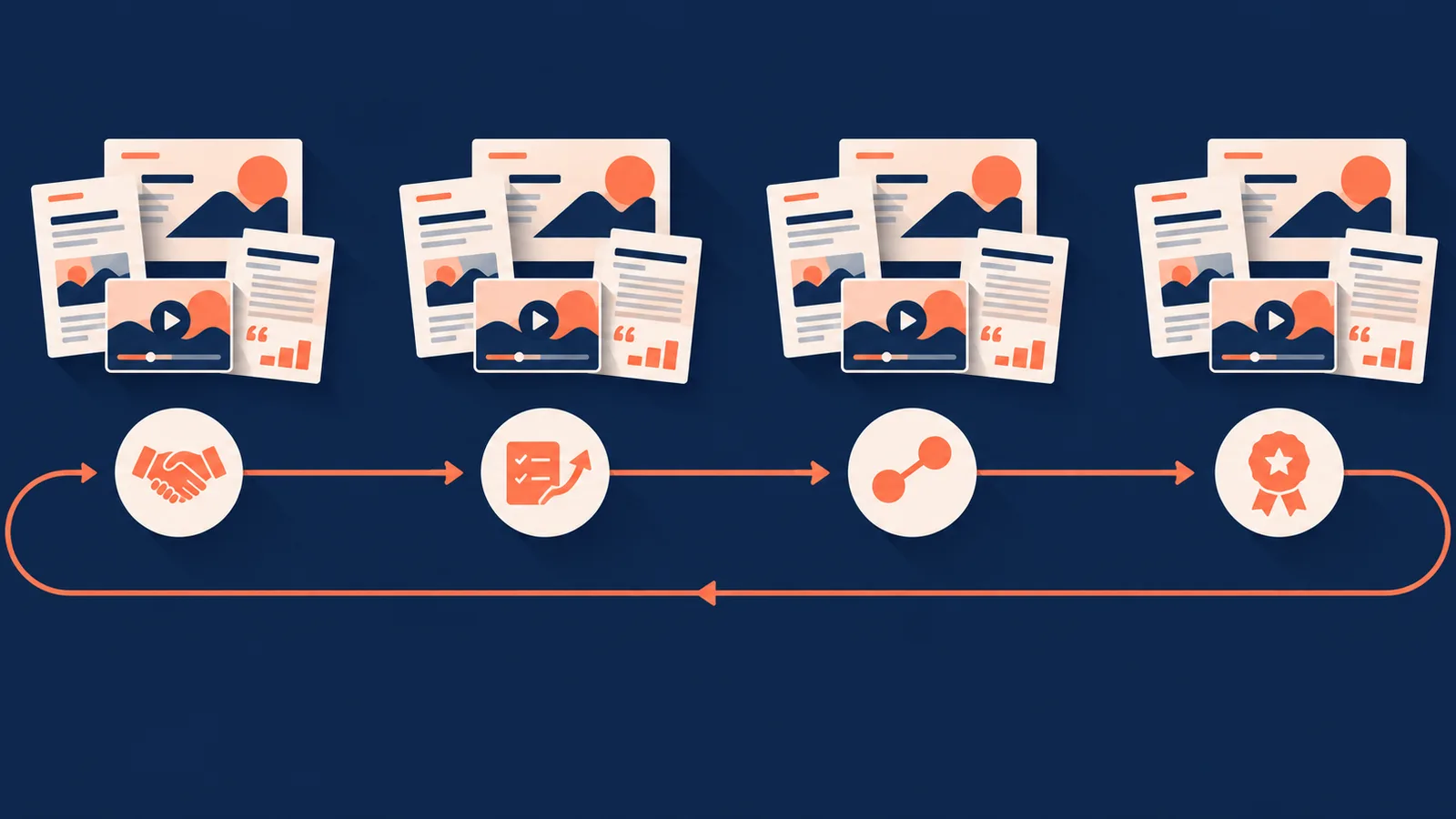
Marketing Collateral Design Services: The Whole Customer Journey
A dedicated team designs your collateral across the whole customer journey: sales, onboarding, referral, and advocacy. What it covers and how to choose one.

Covering a Designer’s Leave or Hiring Gap Without a 12-Month Contract
A maternity cover, a departure, or a launch needs capacity for a set period, not a permanent hire or a year-long contract. The options, and a faster way.

Creative overflow: handle the peaks without a freelancer scramble
Creative demand spikes then falls. Staff for the peak and you pay for idle time. Compare the overflow options and what gives capacity without a scramble.