How to Brief a Creative Team So the Work Comes Back Usable
A good creative brief is a decision-making tool, not 'make it look nice.' What to include, common mistakes, and how to brief for a usable first round.
A good creative brief is a decision-making tool, not a request for something that "looks great." It tells the team what problem to solve, for whom, what the audience should take away, and which constraints are fixed, while leaving room to find the creative answer.
The aim is not zero revisions. It is a first round you can evaluate and use instead of one that sends everyone back to the start. This guide covers what to include, the mistakes that cause rework, and how to brief a creative team so the first version comes back usable.
What should a creative brief include?
Keep the main brief short and put supporting material in links or attachments. For a B2B design, content, or video project, these fields make the difference between a usable first round and a guess.
| Field | What the team needs to know |
|---|---|
| Problem and context | Why this work exists now, what is not working, and where it fits in the wider campaign or customer journey. |
| Primary objective | The one outcome that matters most, plus a measure if you have one. Separate the business outcome from what this single asset can realistically achieve. |
| Audience insight | Who will see it, at what stage, what they care about, and what they currently believe or misunderstand. "B2B decision-makers" is too broad to guide a concept. |
| Message and action | The single most important takeaway, the proof behind it, and what the audience should do next. |
| Placement and deliverables | Where it runs, the asset count, lengths or dimensions, formats, aspect ratios, language versions, editable files, and any accessibility or platform requirements. |
| Guardrails and inputs | Brand rules, approved claims, legal requirements, required copy, existing assets, budget, and anything off-limits. Mark references as "use this" or "inspiration only." |
| Review and success | The first-review date, final deadline, who gives consolidated feedback, who approves, what is out of scope, and the criteria for accepting the work. |
The core set recurs across serious briefing guidance: objective, audience, message, deliverables, stakeholders, budget, timeline, and distribution. The two fields teams most often leave vague are the exact technical specifications and approval ownership. Those two decide whether the output is usable.
The most common creative brief mistakes
Most weak briefs fail in the same predictable ways.
- Briefing an aesthetic instead of a problem. "Make it premium and modern" gives the team no basis for choosing between two attractive but strategically different options. Explain the audience's hesitation and what the work must change.
- Treating every message as equally important. If five benefits are all the main point, the team cannot build a hierarchy. Pick a lead message and label the rest as support.
- Leaving production requirements until the end. A strong concept can still be unusable if required versions, formats, claims, or source files surface only after the design is finished. Include the specifications from the start.
- Using references without saying why. Name the specific quality you like, such as pacing, typography, or clarity, rather than saying "make it like this." State what should not be copied too.
- Over-prescribing the solution. A brief should set direction and constraints, not hand over a finished layout or script while still expecting creative thinking.
- Letting approvals appear late. Unnamed reviewers and a surprise decision-maker can turn a near-final asset into a new brief. Name the approver from the start.
How to brief for a usable first round
Getting a usable first version depends less on a longer brief and more on three actions before the team starts.
- Align the requesters first. Resolve disagreements about audience, objective, scope, and final approver before work begins. If decisions remain open, label them as open rather than disguising an assumption as a requirement and discovering the gap during review.
- Walk through the brief together. Do not send a form and hope. Ask a creative lead to pressure-test it: what must be true for this to work, what can the team decide, and what would cause a rejection? Completing the brief together surfaces missing details while they are still cheap to fix.
- Agree what the first review is for. Decide whether the first round tests the concept or polishes execution. Make sure the people in that review can give consolidated feedback and a decision. A review without a decision-maker is how one clear round becomes three.
How Room4 Teams makes briefing easier
In our model, you own the thinking and the brief. The team produces the work. You do not have to write the perfect brief alone.
Your dedicated Room4 Teams service includes a project manager and creative director who help shape and pressure-test the brief before work begins. They own onboarding, supervision, review, and quality control, so a rough brief can become a usable first round instead of three rounds of rework. Because the same team works on your brand, it learns your standards, audience, and guardrails once. Briefs can become shorter over time, and each first version can land closer to the requirement.
You brief the work and approve it. The team handles production through graphic designers, motion graphics artists, video editors, UI designers, web designers, and web developers. The all-inclusive fee covers the project manager and creative director, software and AI tools, quality control, stock videos and photos, unlimited tasks and revisions within the team's production capacity, a secure portal, production priority, source files, and Slack or your own tools.
A full team can begin producing within two business days of starting. A dedicated team runs around 45% less than the loaded cost of hiring the same role in-house (salary plus employer taxes).
See what we produce and how it works, or read how to scale creative production without growing headcount.
Frequently asked questions
What is a creative brief?
What should a creative brief include?
What makes a good creative brief?
Why does creative work come back needing so many revisions?
How do you brief an outsourced or dedicated creative team?
More on Creative Production
Marketing Collateral Design Services: The Whole Customer Journey
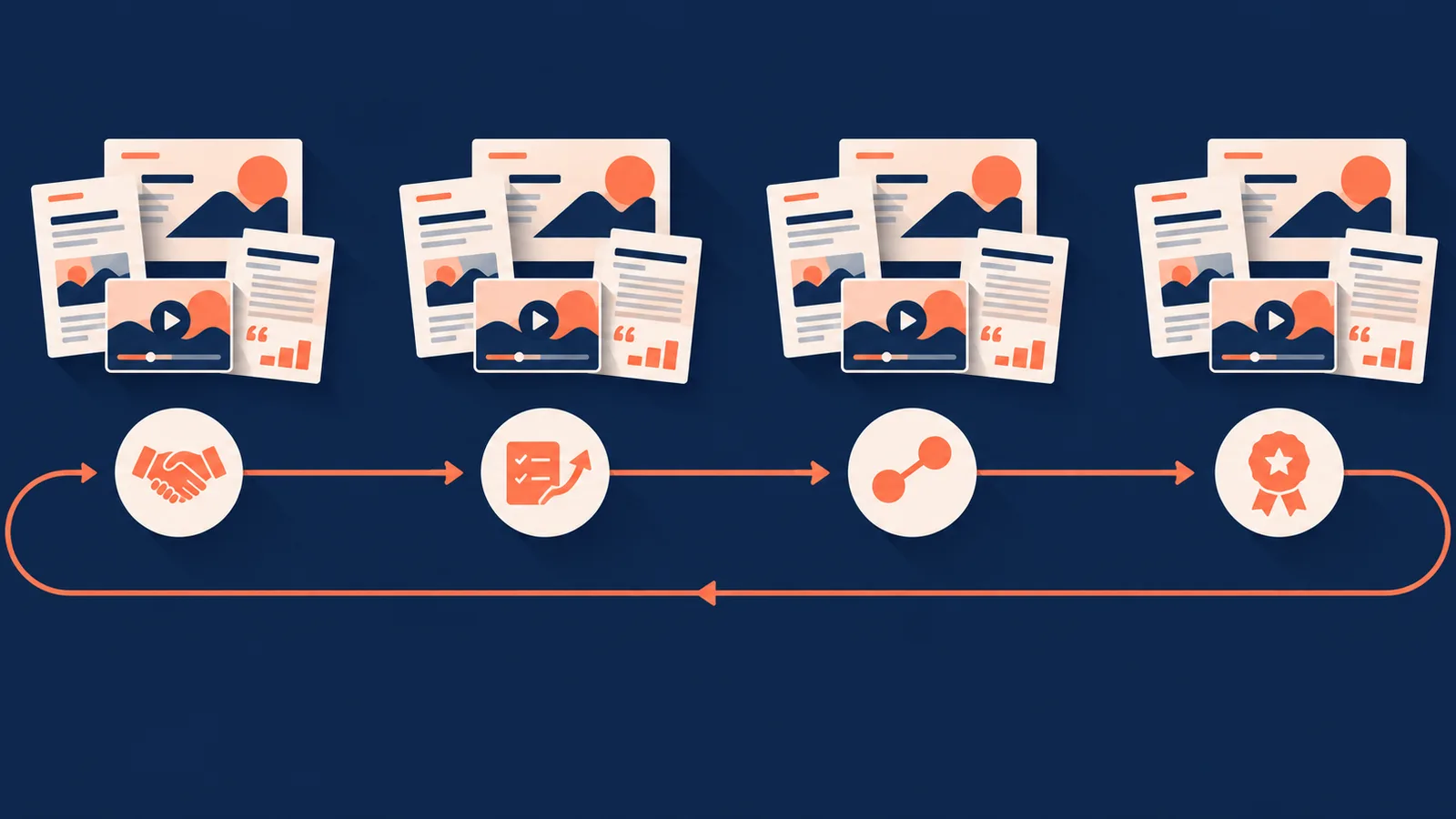
A dedicated team designs your collateral across the whole customer journey: sales, onboarding, referral, and advocacy. What it covers and how to choose one.

Covering a Designer’s Leave or Hiring Gap Without a 12-Month Contract
A maternity cover, a departure, or a launch needs capacity for a set period, not a permanent hire or a year-long contract. The options, and a faster way.

Creative overflow: handle the peaks without a freelancer scramble
Creative demand spikes then falls. Staff for the peak and you pay for idle time. Compare the overflow options and what gives capacity without a scramble.