Presentation Design Services for Agencies and Teams
Presentation design services turn rough decks into on-brand slides at volume. Here is what they cover, what good looks like, and how to run them.
Presentation design services turn raw content into finished, on-brand slides: pitch decks, sales decks, reports, and webinar and event presentations. The good ones do more than tidy up formatting. They concept the story, art-direct the look, build a reusable template, and produce the slides, so a 20-slide deck comes back clear and consistent, not just neater.
For teams and agencies with steady deck demand, the question is how to get that volume produced reliably without hiring a designer for it. This guide covers what presentation design services include, how to tell formatting from real design, how white-label works for agencies, and how to produce decks at volume.
What are presentation design services?
They are creative production focused on slides. You bring the content, the message, and the goal; the service designs the deck. That spans a one-off investor pitch, a recurring sales deck kept current, a dense technical report made readable, and event or webinar slides built to be watched, not read.
The demand is usually ongoing, not one-off. Sales decks change with the pitch, reports come every quarter, and event season brings a wave at once. That is why deck design tends to arrive as steady volume, and why the way you resource it matters more than any single deck.
What do presentation design services cover?
A full service covers more than making slides look better. It covers the thinking and the system behind them.
That means shaping the narrative and slide flow, so the argument lands in order. It means art direction: a visual approach that fits the brand and the audience. It means a master template and slide library, so the next deck starts from a system, not a blank page. It means the production itself, the layout, data visualization, icons, and diagrams. And it means motion where a slide needs to build or animate. The output is a deck your team can present and reuse, plus the working file to edit later.
See the full range of what we produce.
Do presentation design services just format slides, or actually design them?
This is the line that separates a real service from a cleanup pass, and it is worth testing before you commit. Formatting aligns boxes, fixes fonts, and applies your colors. Design decides what each slide should say, how the story flows, and how to show a complex idea simply. One makes a deck tidier; the other makes it work.
Ask who concepts and art-directs the deck, not just who builds it. A service with art direction can take a rough outline and a goal and come back with a structure and a look, which is what you need when you do not have a designer or an art director to brief every slide. A service without it needs you to art-direct, which puts the creative load back on you. If you are short an art director in-house, this is the capability to check for.
Can an agency white-label presentation design?
Yes. For agencies that build decks for clients, presentation design can run under your brand. The work ships with no trace of the production team, in your client's template and brand, and you present it as your own. Behind an NDA, the team works only with you and never contacts your client.
Creatives can also be client-facing when the work calls for it, joining under your name rather than as an outside vendor. You keep the account and the relationship; the team supplies the design capacity. That is what lets an agency take on more deck work than its own designers can absorb without hiring. See how white-label works.
How fast can a deck be turned around?
For a standard deck built on an agreed template, a first version usually comes back in a few business days, with more complex or first-of-a-kind decks scoped to their own timeline. The template is the lever. The first deck in a new relationship takes longest, because that is where the look, the system, and the brand rules get set. Once the template exists, later decks move much faster on top of it.
That is why deadlines hold better with a standing team than with a new supplier each time. A team that already knows your brand and your template is not relearning it on every deck, so the turnaround gets shorter and the quality gets steadier as you go.
How do you produce decks at the volume you need?
One deck is a project. A pipeline of sales decks, quarterly reports, and event season is an operation, and it needs steady capacity rather than a scramble each time.
| Approach | Best for | Where it strains |
|---|---|---|
| In-house designer | Constant, year-round deck volume | Cost of the hire; one person is a bottleneck at peak |
| Freelancers | Occasional one-off decks | Coordinating availability; no one owns your template; consistency drifts |
| Agency per project | High-stakes hero decks | Cost per deck; slow for steady volume; re-briefing each time |
| Dedicated team | Ongoing decks and updates on one template | Needs a clear brief and a named owner on your side |
For steady deck demand, a dedicated team that holds your template and learns your brand produces more, and keeps it consistent, than an arrangement rebuilt for each deck.
How Room4 Teams produces presentation design
Room4 Teams gives you a dedicated creative team that produces decks as ongoing volume, not one-off jobs, with concept and art direction, template systems, data visualization, and motion, backed by the full production range across what we produce. A dedicated creative project manager runs communication and quality control, and creative direction holds the look steady, so deck twenty matches deck one. For agencies, the same team works under your own brand and never contacts your client.
You choose how it runs. The managed service takes the briefs and returns finished work, from one team member up, on one fixed monthly fee that covers unlimited tasks, unlimited revisions, and the full tech stack: all software, all AI tools, and all the stock libraries we use. The integrated option embeds our creative production in your tools. You set priorities and approve the output; we remain responsible for our people, methods, and quality. On cost, a dedicated team runs around 45% less than the loaded cost of hiring the same role in-house (salary plus employer taxes). See pricing. The team starts within two business days and flexes with one month's notice. See how it works.
For the broader operating model behind a standing creative agreement, read how a design retainer works.
What to do next
If your deck volume is steady, stop resourcing it one deck at a time. Build your team and produce decks on one template, with one team, at the pace the work actually arrives.
Frequently asked questions
What do presentation design services include?
What is the difference between presentation formatting and presentation design?
Can presentation design be white-labeled for my agency's clients?
How long does it take to design a presentation?
How do you keep a large volume of decks consistent?
More on Creative Production

When Your Marketing Team Is Designing in Canva: What to Hand Off
DIY design in Canva and AI tools is right for some work and costly for the rest. What it really costs, what to keep in-house, and what to hand off.
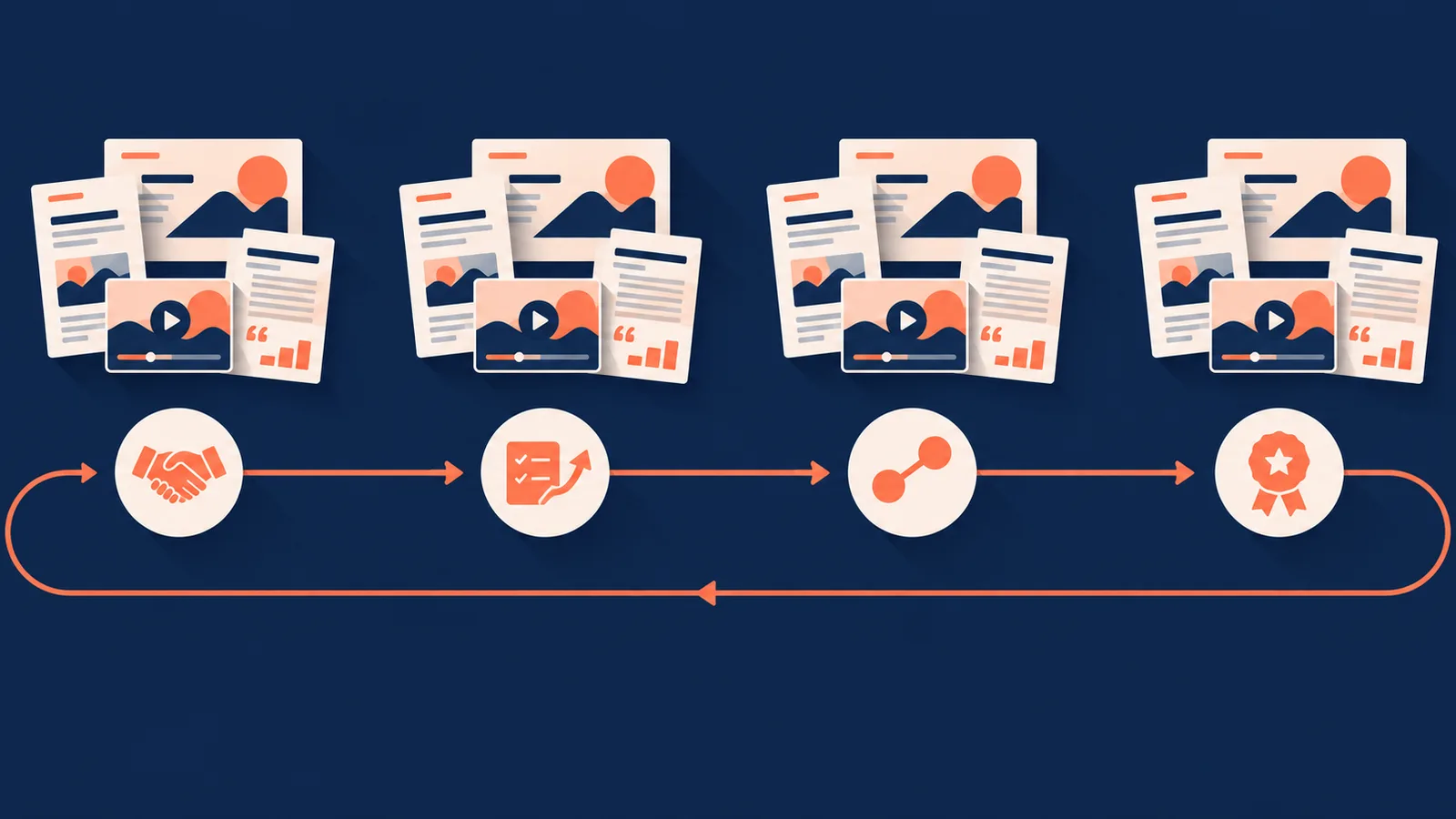
Marketing Collateral Design Services: The Whole Customer Journey
A dedicated team designs your collateral across the whole customer journey: sales, onboarding, referral, and advocacy. What it covers and how to choose one.
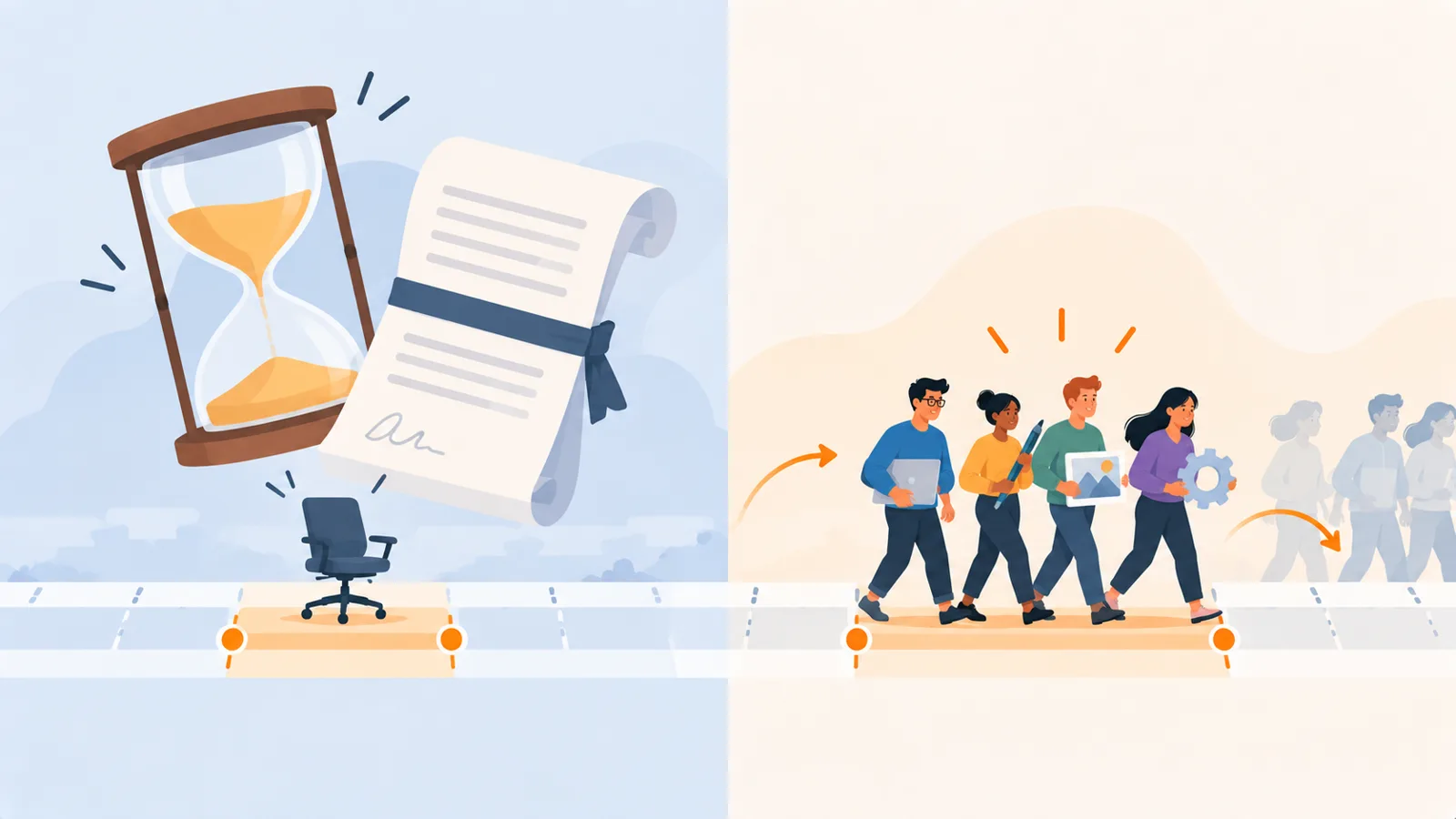
Covering a Designer’s Leave or Hiring Gap Without a 12-Month Contract
A maternity cover, a departure, or a launch needs capacity for a set period, not a permanent hire or a year-long contract. The options, and a faster way.