When Your Marketing Team Is Designing in Canva: What to Hand Off
DIY design in Canva and AI tools is right for some work and costly for the rest. What it really costs, what to keep in-house, and what to hand off.
Design tools like Canva, and the AI features now built into them, are the right call for a lot of a marketing team's work, and a quietly expensive one for the rest. The cost is not the subscription. It is the hours your marketers spend formatting instead of marketing, the brand drift that creeps in when everyone makes their own version, and the sales assets that look thin next to a competitor's. This guide covers what do-it-yourself design actually costs, which work to keep in the tool, which to hand off, and how a dedicated team fits around both.
What DIY design actually costs
The monthly tool fee is the smallest number in this. The real cost shows up in five places, and most of it never appears on an invoice.
| Cost | What it looks like |
|---|---|
| Time | A marketer builds the deck, hunts for icons, fixes the alignment, exports it, resizes it for LinkedIn, the site, and email, then revises it after feedback |
| Brand consistency | Different slide masters, colors, type sizes, image styles, and logo spacing spread across the team, so the work slowly stops looking like one company |
| Quality | Generic templates, weak visual hierarchy, cluttered charts, and data that is hard to read, on the assets a buyer actually judges you by |
| Opportunity cost | A marketing manager spends six hours formatting a deck instead of working on positioning, demand generation, or talking to customers |
| Coordination | Several people make their own version of the same asset, reviewers repeat the same feedback, and the files multiply until no one knows which is current |
Canva itself names the trade-off underneath this: AI makes it easy to create more content faster, and teams then struggle to scale that without losing brand consistency, quality, and coordination. The tools are good. The problem is asking a team that is not trained in design to carry the high-stakes work on top of everything else they own.
Where DIY design is the right call
This is not an argument to stop using Canva. For a large share of a marketing team's output, it is the correct tool, and handing it to an outside team would be slower and more expensive.
Keep it in-house for high-volume, low-risk work: social posts, simple one-pagers, internal decks, webinar and event graphics, quick edits, and anything that just needs to drop into an existing template. When the brand rules are already set and the asset is routine, a marketer with a good template produces it fast, and that speed is worth more than polish.
Where it starts to cost you
DIY design turns expensive when the work is brand-defining, sales-critical, or technically complex, because those are the assets that decide how buyers see you.
Brand-defining work sets the standard everything else copies: the master templates, the brand system, the hero pages. Get these wrong and every DIY asset inherits the problem. Sales-critical work is what closes deals: the pitch deck, the key one-pagers, the proposals, the case studies. A buyer weighs these directly, and thin design reads as a thin company. Technically complex work is beyond what a template covers: data visualization, motion, video, and web. And there is the capacity wall, when a launch or a campaign asks for more than the team can make, and design gets squeezed or skipped.
The research backs the stakes. McKinsey's long-running study of design and business performance found that the strongest design performers grew revenue and shareholder returns markedly faster than their peers. Design quality is not decoration on these assets; it is part of what the buyer is buying.
The setup that actually works
The answer is not all DIY or all handed off. It is a split, with a dedicated team running the part that holds it together.
A dedicated creative team does two things here. It builds and maintains the system your DIY work runs on: the master templates, the brand kit, the component library, so when your marketers make a social post or an internal deck in Canva, it comes out on brand without them having to think about it. And it produces the high-stakes work itself: the pitch deck, the campaign, the data-heavy report, the video, the web build. Your team keeps the fast, routine work and gets its time back; the team carries the work that a buyer judges you on.
That is the difference between a tool and a capability. The tool lets anyone make something. The capability makes sure the things that matter are made well, and that the rest stay consistent.
How Room4 Teams fits around your tools
Room4 Teams gives you a dedicated creative team that builds the system your in-house design runs on and produces the work you should not be making yourself. The team sets up and maintains your templates and brand kit, so the assets your marketers produce in their own tools stay on brand, and it handles the brand-defining, sales-critical, and complex work: decks, one-pagers, campaigns, data visualization, motion, video, and web.
You brief the work and approve it. A project manager and a creative director on the team own the resourcing, the supervision, and the quality control, so your marketing lead stops formatting and goes back to marketing. The team is drawn from the talent your work needs: graphic designers, motion graphics artists, video editors, UI designers, web designers, and web developers. The fee also covers the software and AI tools the team needs, stock videos and photos, unlimited tasks and revisions, and a secure portal, and you receive the source files. You have a full team producing within two business days of starting, and a dedicated team runs around 45% less than the loaded cost of hiring the same role in-house (salary plus employer taxes). See what we produce and how it works, or read keeping brand consistency at scale and when production crowds out the work that matters.
Frequently asked questions
Is it bad for a marketing team to design in Canva?
What does DIY design really cost a marketing team?
Which design work should we keep in-house and which should we hand off?
How do you keep DIY design on brand?
How does Room4 Teams work alongside our own tools?
More on Creative Production
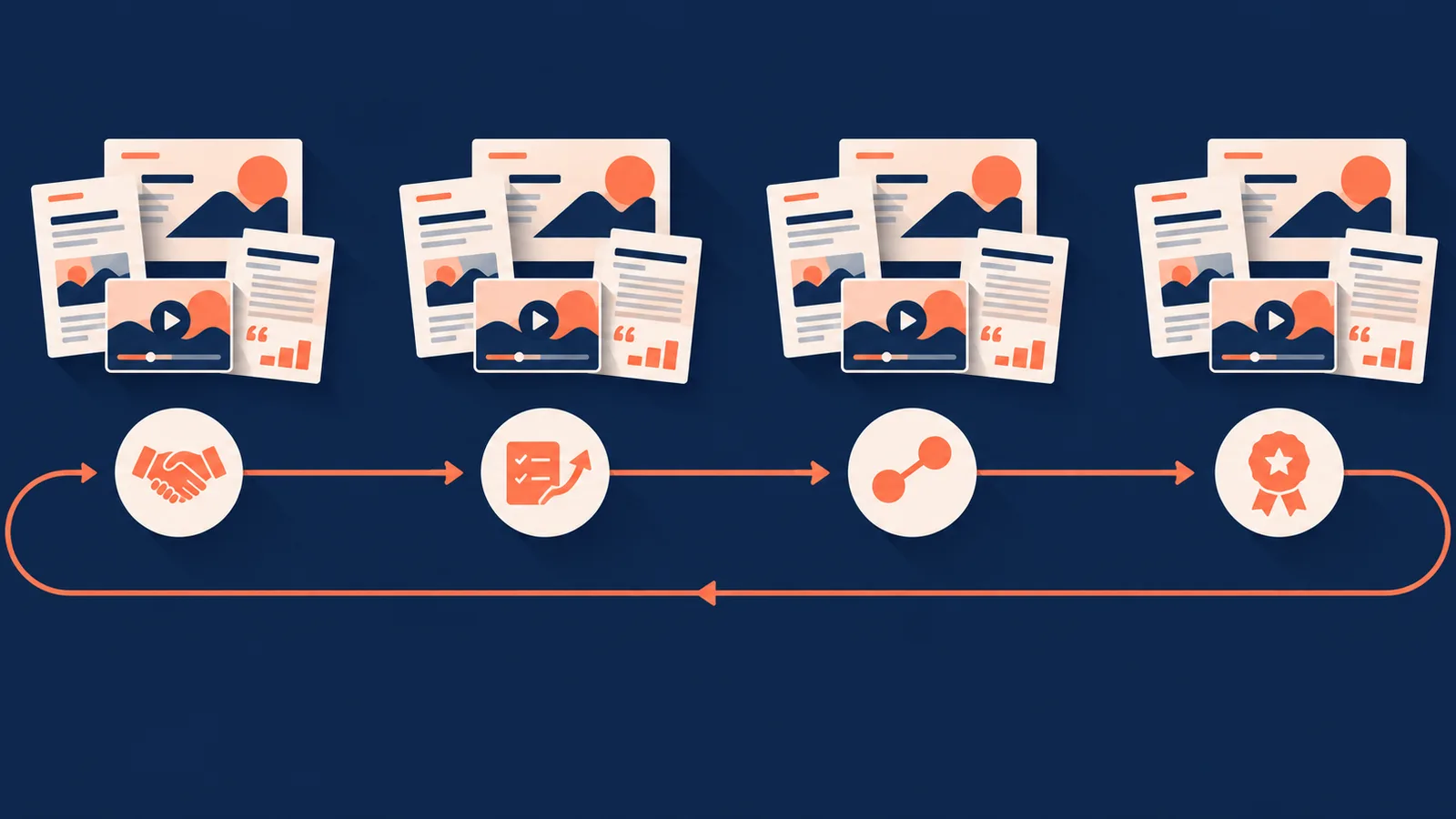
Marketing Collateral Design Services: The Whole Customer Journey
A dedicated team designs your collateral across the whole customer journey: sales, onboarding, referral, and advocacy. What it covers and how to choose one.

Covering a Designer’s Leave or Hiring Gap Without a 12-Month Contract
A maternity cover, a departure, or a launch needs capacity for a set period, not a permanent hire or a year-long contract. The options, and a faster way.

Creative overflow: handle the peaks without a freelancer scramble
Creative demand spikes then falls. Staff for the peak and you pay for idle time. Compare the overflow options and what gives capacity without a scramble.