When Production Work Crowds Out Creative Strategy
In-house creative teams turn into production teams as demand outgrows capacity. Why it happens, what it costs, and how to get the strategy time back.
In-house creative teams often turn into production teams. Demand for assets grows faster than the team's capacity, and urgent requests, revisions, and approvals consume the hours meant for thinking. The people hired to shape the brand end up resizing, versioning, and coordinating instead.
The fix is not to outsource creative judgment. Keep the judgment and original thinking close to the business, then give repeatable production work a separate, reliable route out. This guide explains why production takes over, what it costs, how to recover strategy time, and where a dedicated production team fits.
Why does production work take over an in-house creative team?
Three forces push a creative team toward production, and they compound.
Every idea multiplies into deliverables. One campaign becomes social formats, display sizes, video cuts, localized versions, and a stream of ongoing updates. In Adobe research across more than 1,600 marketers, nearly all said content demand had at least doubled over the previous two years. The concept is one job. The outputs can be a hundred.
Incoming work crowds out planned work. In a 2025 survey of senior in-house leaders, most said a large share of their work was ad hoc and reactive. When a rush request and a piece of concept development sit in the same queue, the request with the nearest deadline wins.
The workflow itself consumes capacity. Reviews, approvals, and coordination take real hours. Research has found that many marketers spend a large part of their week managing feedback and approvals rather than creating. Many teams also work without tracked time or an agreed brief before starting, which adds rework.
This does not mean every team spends its days on basic asset adaptation. But the strategy-time squeeze is real. In one survey, a large share of teams spent no more than a quarter of their time on original, brief-led creative work.
What production work costs you
The clearest cost is opportunity cost. Experienced people spend hours versioning and coordinating assets instead of improving the idea, testing a new approach, or solving a business problem. Surveys of enterprise creative leaders repeatedly find the same pattern: designers doing work below their skill level, people wanting to make bolder work but racing the clock, and workload-related burnout across the team. Skilled hours spent on routine execution are the most expensive hours to waste.
There is a delivery cost too. Production requests compete with campaign development for the same finite hours. The team must delay strategic work, narrow its ambitions, work longer, or scramble for help too late.
Compare the full cost of doing the work internally, including time, rework, management, and the higher-value work it displaces, with the full cost and quality of an external option. Keeping work in-house is not automatically cheaper.
A concrete example makes the trade-off visible. If a senior creative spends twelve hours a week turning an approved campaign into channel variants, that is twelve hours unavailable for concepts and direction. Moving those adaptations creates value only when briefing, review, and correction take substantially less time than the twelve hours released. The numbers are illustrative; your baseline gets set from your own data.
How to get strategy time back
The operating principle is simple. Own the thinking and flex the execution. External capacity works best as an extension of a well-directed in-house team, not as a replacement for prioritization or creative leadership.
- Map the work for a few weeks. Record requests, hours, revisions, turnaround, and who approves each one. Separate original concepts from the execution of approved concepts and straightforward adaptations.
- Keep the decisions in-house. Retain audience insight, brand and campaign strategy, master concepts, creative direction, and final brand approval. Send well-defined work such as resizing, versioning, localization, retouching, and edit variations to a production partner once the direction is set.
- Fix intake before adding capacity. Give the partner a complete brief, source files, templates, brand rules, specifications, a named approver, and an agreed revision process. Otherwise, production hours simply become briefing and rework hours.
- Pilot one repeatable workstream. Measure the internal hours recovered, cost, turnaround, and revision rate. Check whether the reclaimed time actually goes to strategic work, then expand only if the balance improves.
- Reduce unnecessary production. Controlled templates let colleagues make routine, on-brand materials without pulling a designer into every request. The creative team stays available for complex work.
How Room4 Teams gives you production capacity without taking the thinking
Room4 Teams is built for this split. You keep the strategy, brand, concepts, direction, and final approval. Your dedicated Room4 Teams production team handles resizing, versioning, localization, edits, and the steady volume of on-brand assets that would otherwise consume your week.
You brief the work and approve it. A Room4 Teams project manager and creative director own onboarding, supervision, and quality control. This keeps your role focused on decisions rather than managing a production queue.
The team can include graphic designers, motion graphics artists, video editors, UI designers, web designers, and web developers. They work on your brand and learn your standards once. The all-inclusive fee covers the project manager and creative director, software and AI tools, quality control, stock videos and photos, unlimited tasks and revisions within the team's production capacity, a secure portal, production priority, source files, and Slack or your own tools.
The team can begin producing within two business days of starting. A dedicated team runs around 45% less than the loaded cost of hiring the same role in-house (salary plus employer taxes). The point is not to replace your creative leadership. It is to give your best people their strategy time back.
See what we produce and how it works, or read about the design bottleneck and how to scale creative production without growing headcount.
Frequently asked questions
Why do in-house creative teams end up doing so much production?
What does it cost to have senior creatives doing production?
How do you offload production without losing control of the brand?
How is a dedicated production team different from hiring an agency?
How fast can a dedicated production team start?
More on Creative Production
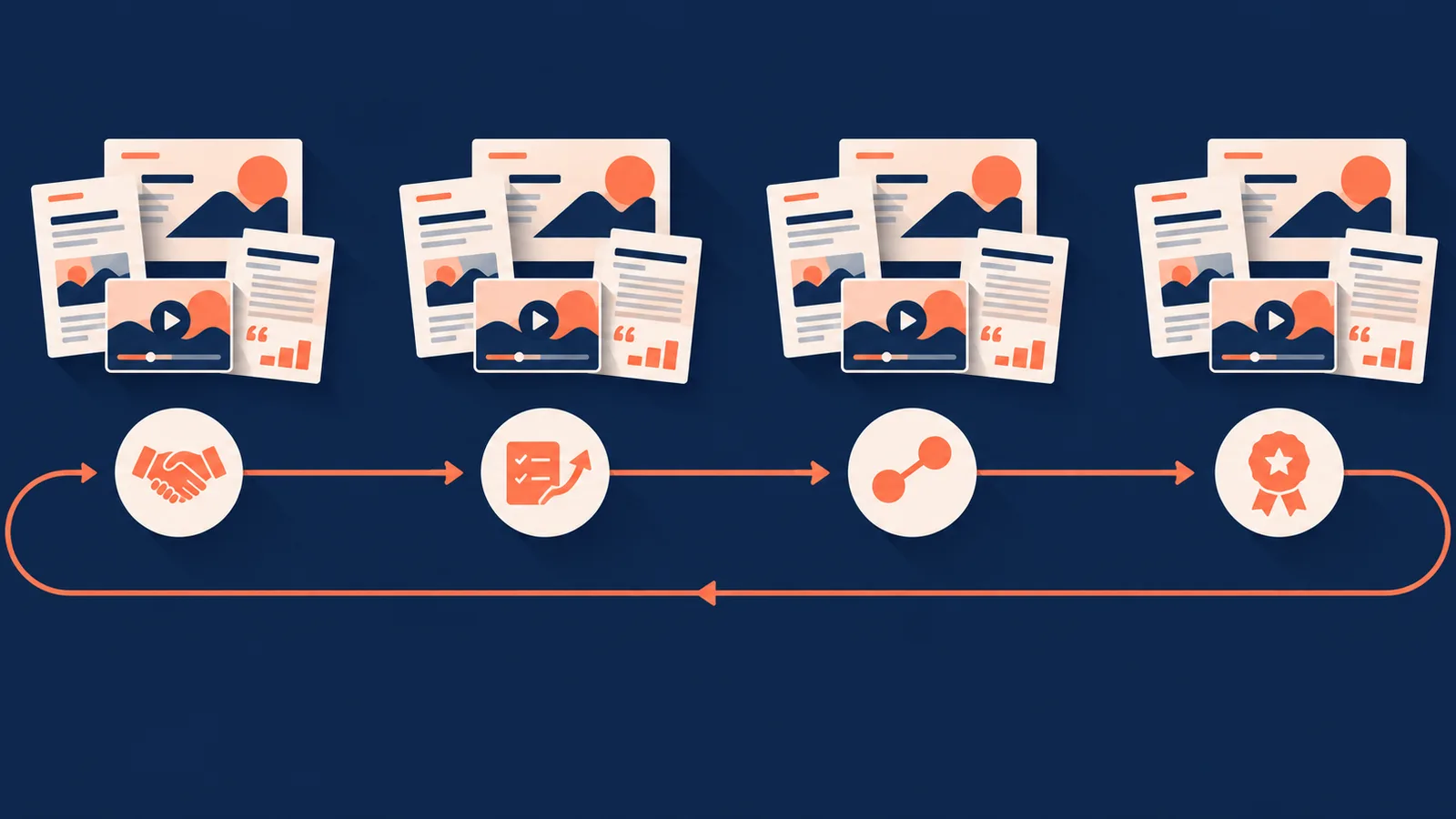
Marketing Collateral Design Services: The Whole Customer Journey
A dedicated team designs your collateral across the whole customer journey: sales, onboarding, referral, and advocacy. What it covers and how to choose one.
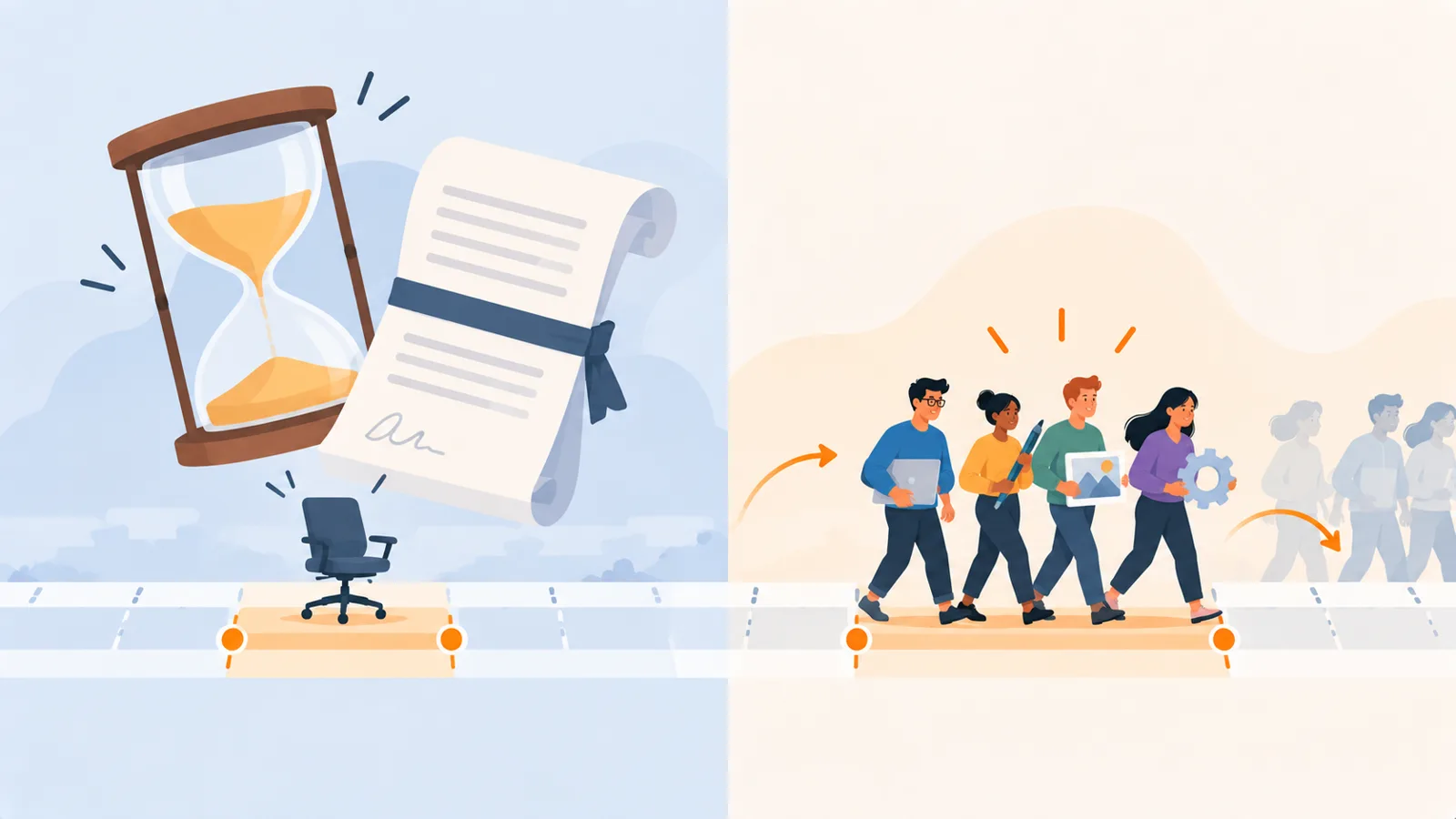
Covering a Designer’s Leave or Hiring Gap Without a 12-Month Contract
A maternity cover, a departure, or a launch needs capacity for a set period, not a permanent hire or a year-long contract. The options, and a faster way.

Creative overflow: handle the peaks without a freelancer scramble
Creative demand spikes then falls. Staff for the peak and you pay for idle time. Compare the overflow options and what gives capacity without a scramble.