Graphic Design Outsourcing: A Practical Guide
Graphic design outsourcing works best as a hybrid: keep strategy in-house, send out the volume. The models, how to brief, and how to stay on brand.
Graphic design outsourcing means sending some of your design work to an outside team instead of producing all of it in-house. The setup that works is almost always hybrid: keep brand strategy, the design system, and high-stakes work in-house, and outsource the production-heavy and specialist work, social assets, ad variants, decks, infographics, and launch overflow.
The right model depends on three things: how often you need design, how fast you need it, and how tightly it has to stay on brand. This guide covers what to keep and what to send out, the four common models and their trade-offs, how to brief so you get it right the first time, and how to hold brand consistency at volume.
What is graphic design outsourcing?
It is using an outside designer or team to produce design work your own team cannot absorb. That can be a single freelancer for one project or a standing team producing every week. The goal is not to replace your team; it is to add capacity and specialist skills without a full-time hire for every gap.
Most companies reach for it when demand outgrows the people they have, or when the work is spiky: a launch, a campaign season, or a run of formats their in-house designer does not specialize in. Outsourcing flexes with that demand in a way a fixed headcount cannot.
What should you keep in-house?
Keep the work that shapes the brand, moves fast with internal stakeholders, or sits close to revenue. Your in-house people are closer to the brand and the decisions, so they hold consistency and turn around internal changes faster than any outside partner can.
That usually means brand identity and how it evolves, ownership of the design system and the templates that get reused at scale, the priorities on core marketing campaigns, executive and investor-facing materials, and the quick revisions tied to internal approvals. These are the pieces where control matters more than capacity.
What should you outsource?
Outsource the work that is repetitive, seasonal, specialist, or volume-driven. This is where an outside team adds the most and costs you the least in control.
Good candidates are high-volume production like social assets and ad variants, presentation cleanup and deck build, infographics and whitepaper layouts, event graphics, localized adaptations for different markets or formats, specialist work like motion and illustration, and the overflow when your team is at capacity during a launch. None of these need to sit in-house; all of them eat your designers' time if they do.
What are the models for outsourcing graphic design?
There are four common models, and many companies blend them. They differ on continuity, cost, and how much process you need to run them.
| Model | Best for | Trade-off |
|---|---|---|
| Freelancer | Specific projects and specialist skills, variable demand | Less continuity and limited capacity |
| Agency | Multi-skill campaigns, reliability, larger workstreams | Higher cost, less day-to-day control |
| Subscription / on-demand | Ongoing high-volume production | Weaker for deep brand strategy |
| Dedicated team | Steady throughput at a lower cost than hiring | Needs strong process and brand governance |
A dedicated team is an extended-team arrangement: the same people work as an extension of yours, week after week, rather than a project you buy and close. It gives you the most capacity for the money, and its one trade-off, that it needs strong process and governance, is solvable. A managed dedicated team supplies that process itself: a project manager who runs communication and quality control, and creative direction that holds the brand. That turns the model's weakness into its strength.
How do you brief an outsourced design team?
A clear brief is what prevents revisions, because it stops the team guessing at strategy or audience. A good one answers five questions: what are we making, who is it for, what does success look like, what are the constraints, and how will it be used.
In practice, include the objective and the business goal, the audience and the channel, the deliverables and formats, the key message and tone, the mandatory brand and legal rules, examples of what good and not-good look like, and the timeline with the review process and the approver. The most useful habit is to give context, not just instructions. "Make this look premium" tells a designer little; "the audience is enterprise buyers, the goal is to support a high-value offer, and it should feel confident, minimal, and credible" tells them what to actually do.
How do you keep design on brand at volume?
Consistency at volume comes from systems, not from heroics. When the brand lives in a documented system rather than in one designer's head, it survives more people producing more work.
Build a single source of truth for the brand: locked templates for recurring formats, shared asset libraries, approved typography and color rules, and clear usage examples per channel. Add a light review checklist for every asset, name one owner who approves exceptions, and run periodic audits on what is live. Feed the reusable outputs back into the template library so the system gets stronger as you produce. A team working from that system stays on brand across hundreds of assets; a team working without one drifts by the tenth.
How Room4 Teams handles outsourced graphic design
Room4 Teams gives you a dedicated creative team that produces your graphic design as ongoing volume: social assets, ad variants, decks, infographics, event graphics, and the specialist motion and illustration around them. You keep strategy, the brand system, and approvals; the team produces the work against your brand. That is the hybrid setup most companies land on, run for you. See what we produce.
The dedicated-team model needs process and governance, and that is built in. A dedicated creative project manager runs communication and quality control, creative direction holds the brand, and the team works from your templates and guidelines, so consistency holds as volume climbs. You send the briefs and tasks on one fixed monthly fee that covers unlimited tasks, unlimited revisions, and the full tech stack: all software, all AI tools, and all the stock libraries we use. The integrated option embeds our creative production in your tools. You set priorities and approve the output; we remain responsible for our people, methods, and quality. On cost, a dedicated team runs around 45% less than the loaded cost of hiring the same role in-house (salary plus employer taxes). See pricing. The team starts within two business days and flexes with one month's notice. See how it works, or compare the ways to resource ongoing work in freelancers vs agency vs a dedicated team. Agencies can have the team work under their own brand: see white label. For the broader system that makes outsourced design repeatable, read creative operations.
What to do next
If design work is spiky, hire a freelancer for the spike. If it is a defined campaign, brief an agency. If it is ongoing volume, run a dedicated team against your brand system.
Send the brief. We reply within one business day with the team shape and rates.
Frequently asked questions
What graphic design work should you outsource?
What are the models for outsourcing graphic design?
Is outsourcing graphic design cheaper than hiring in-house?
How do you keep outsourced design on brand?
How do you brief an outsourced designer?
More on Creative Production

When Your Marketing Team Is Designing in Canva: What to Hand Off
DIY design in Canva and AI tools is right for some work and costly for the rest. What it really costs, what to keep in-house, and what to hand off.
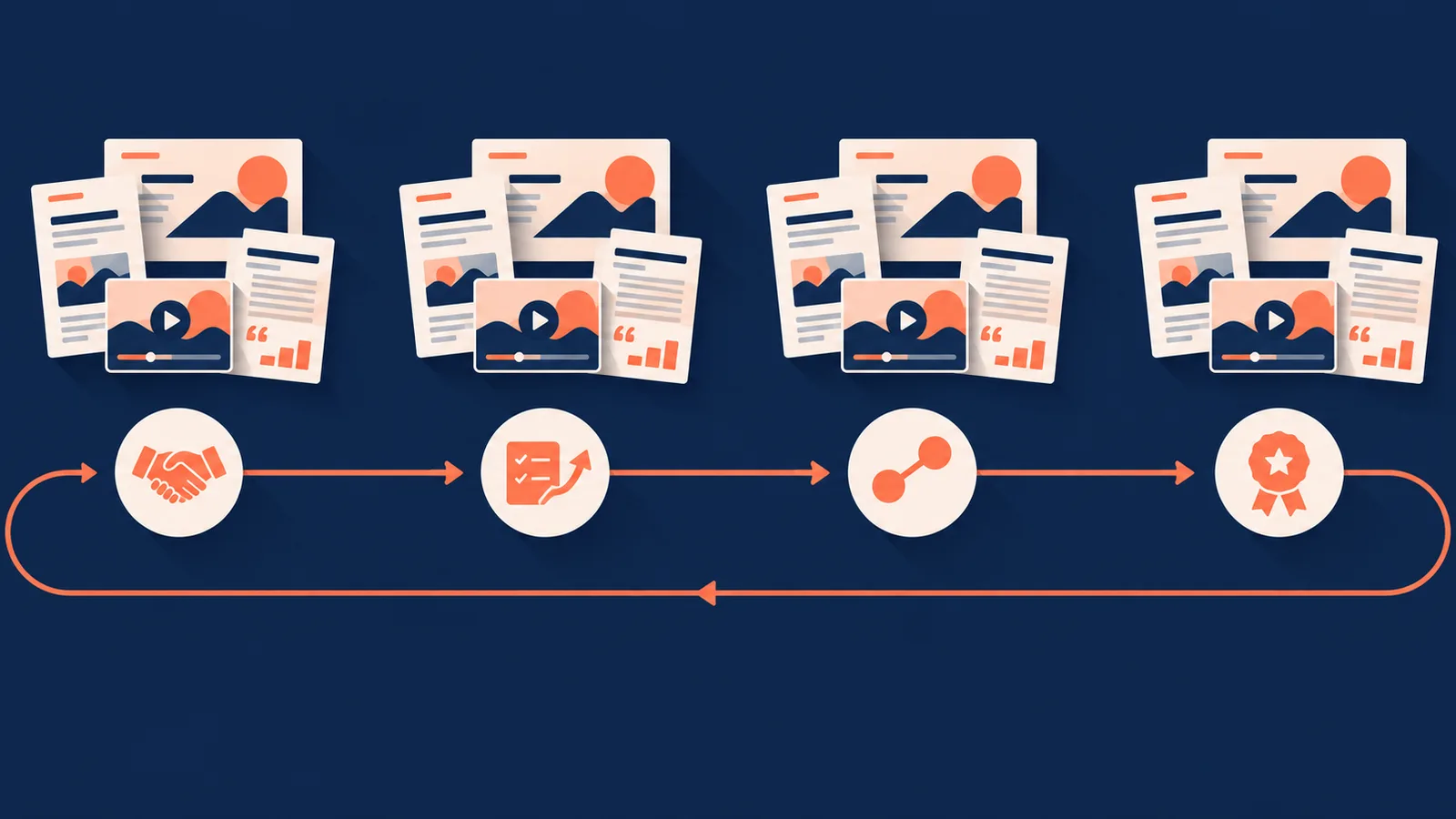
Marketing Collateral Design Services: The Whole Customer Journey
A dedicated team designs your collateral across the whole customer journey: sales, onboarding, referral, and advocacy. What it covers and how to choose one.
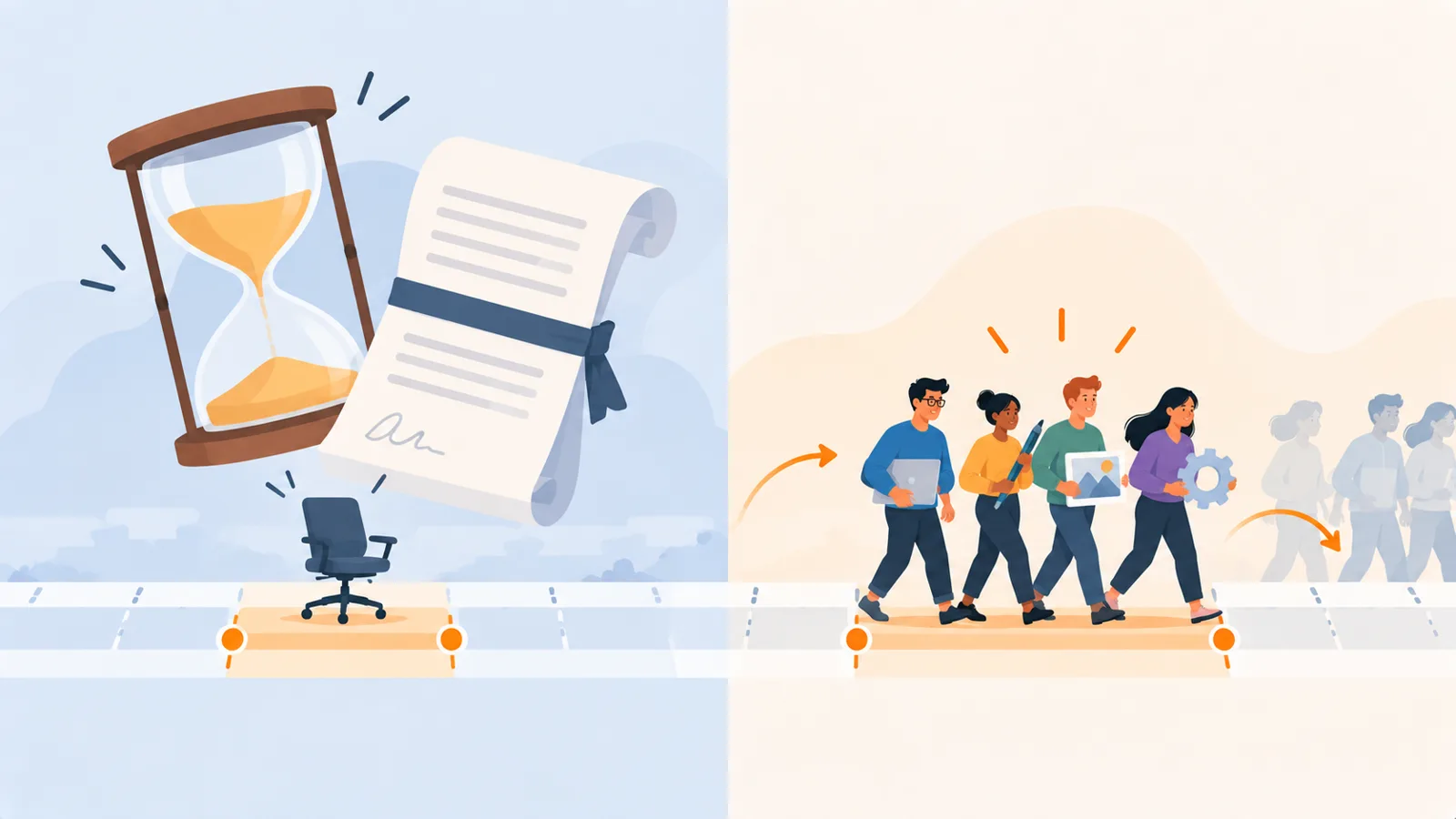
Covering a Designer’s Leave or Hiring Gap Without a 12-Month Contract
A maternity cover, a departure, or a launch needs capacity for a set period, not a permanent hire or a year-long contract. The options, and a faster way.