Outsourcing Creative Services: The Time-Zone Edge
Outsource creative services to a team a few time zones behind you, and work continues while you sleep. Here is how the time difference adds output.
Outsourcing creative services means handing your design, video, motion, and web work to an outside team instead of hiring for it. When that team sits a few time zones behind you, the gap works in your favor. You send the brief and your feedback at the end of your day; the team produces while you are offline; you start the next morning with finished work waiting.
The distance that looks like a drawback becomes a second shift on your project every day. This guide shows how the time difference adds output, where the live overlap fits, and when it works against you.
What does outsourcing creative services mean?
It means a team outside your company produces your creative work: graphic design, motion graphics, video, social ads, and web design and development. You keep the strategy and the brief; the team supplies the production capacity. You get the output without adding headcount, severance, or recruitment cost.
Most teams outsource for one of two reasons. Either they produce more than their own people can absorb, or they want to add capacity without a permanent hire in a tight budget. A dedicated outside team answers both: it scales your output up or down with your workload, on a fixed monthly cost.
How does a time-zone difference become an advantage?
Because creative work has two states: producing and waiting. When your team and your provider share the same hours, the waiting is hidden, because everyone is idle at the same time. When the provider sits a few hours behind you, your idle hours become their working hours. The project moves while you sleep.
Run the day in order. You review yesterday's work in your morning, gather your team's input, and send one consolidated set of feedback and new briefs. That handoff reaches the team as they start their day. They produce through their full shift, which falls across your evening and night. By the time you are back at your desk, a new version is ready. You are never waiting on a team that is waiting on you.
The result is less idle time and more finished work per day, from the same monthly budget. You are not paying for speed; you are removing the dead hours that a same-zone setup leaves in.
What does the workday look like with a team a few hours behind?
Take a company in Europe working with a creative team in Latin America. The difference is about six hours. Your team starts at 9am, and the work sent overnight is already in your inbox. You have your whole morning to review it, run internal checks, and agree on one clear set of instructions, with no one waiting on a reply mid-task.
In your afternoon, the team comes online. That is your live window: a few hours of overlap when you can talk in real time, answer questions, and confirm direction. You hand over the consolidated feedback, and the team carries it through their full day, which runs into your evening. You log off; the work does not.
For a company in the United States, the same logic holds with a smaller gap. A Latin America based team works hours that cover the US day and reaches into the European afternoon, so both markets get real-time overlap plus production that continues past their own working hours.
Where does the live overlap window fit?
It sits in your afternoon, and it matters more than its length. You do not need the team online all day. You need enough real-time hours to align on direction, clear blockers, and answer the questions that a written brief cannot. A few focused hours of overlap do that.
The rest of the day runs asynchronously by design. You brief in a block, the team produces in a block, and the two blocks sit next to each other instead of on top of each other. A dedicated project manager holds the thread across both, so nothing waits for the next overlap to move.
Same-zone team vs a team a few hours behind
| What you get | Same-zone team | Team a few hours behind |
|---|---|---|
| Idle time | You and the team pause together | Your off-hours are their work hours |
| Feedback loop | Same day, but eats into your work time | You review and consolidate before they start |
| Output per day | One shared working day | Your day plus their shifted day |
| Live collaboration | All day | A focused overlap window |
| Best for | Constant real-time, all-day co-working | Brief-and-produce work with daily handoffs |
Read it against how your team actually works. If your creative process is a rolling all-day conversation, a same-zone team fits. If it runs on briefs, reviews, and rounds, a team a few hours behind turns the gap into output.
When does the time difference work against you?
When the work needs constant, live back-and-forth for most of the day, a wide gap adds friction, because your questions wait for the overlap window. It also strains if your briefs are thin, since a team that cannot ask and get an answer in the moment has to guess.
Both are fixable. Keep a dedicated project manager who owns communication, write briefs that stand on their own, and protect the daily overlap for the decisions that need a live conversation. Do that, and the gap stays an advantage instead of a cost. If your work truly cannot move without someone on the other end every hour, a same-zone or onshore team is the honest choice.
How Room4 Teams runs outsourced creative services
Room4 Teams gives you a dedicated creative team based in Latin America, bilingual, across graphic design, motion graphics, video, social ads, and web design and development. The team works hours that overlap the US day and reach into the European afternoon, so you get a live window with your provider and production that continues after you log off. A dedicated creative project manager runs communication and quality control, so the handoff each day turns into finished work, not a queue.
You choose how it runs. The managed service takes the briefs and returns finished work, from one team member up, on one fixed monthly fee that covers unlimited tasks, unlimited revisions, and the full tech stack: all software, all AI tools, and all the stock libraries we use. The integrated option embeds our creative production in your tools. You set priorities and approve the output; we remain responsible for our people, methods, and quality.
On cost, a dedicated team runs around 45% less than the loaded cost of hiring the same role in-house (salary plus employer taxes). See pricing. The team starts within two business days and flexes with one month's notice. See how it works, or for agencies, how white label works.
What to do next
Match the setup to how your work actually moves: if it runs on briefs, reviews, and rounds, put a team a few hours behind you and let your off-hours do the producing. Send the brief and we reply within one business day with the team shape and rates. Build your team.
Related reading: nearshore vs offshore creative production, social media video production.
Frequently asked questions
What does outsourcing creative services include?
How does a time-zone difference help creative work?
Do I lose real-time collaboration with an outsourced team a few hours behind?
Is outsourcing creative services cheaper than hiring?
Where is the Room4 Teams creative team based?
More on Creative Production

When Your Marketing Team Is Designing in Canva: What to Hand Off
DIY design in Canva and AI tools is right for some work and costly for the rest. What it really costs, what to keep in-house, and what to hand off.
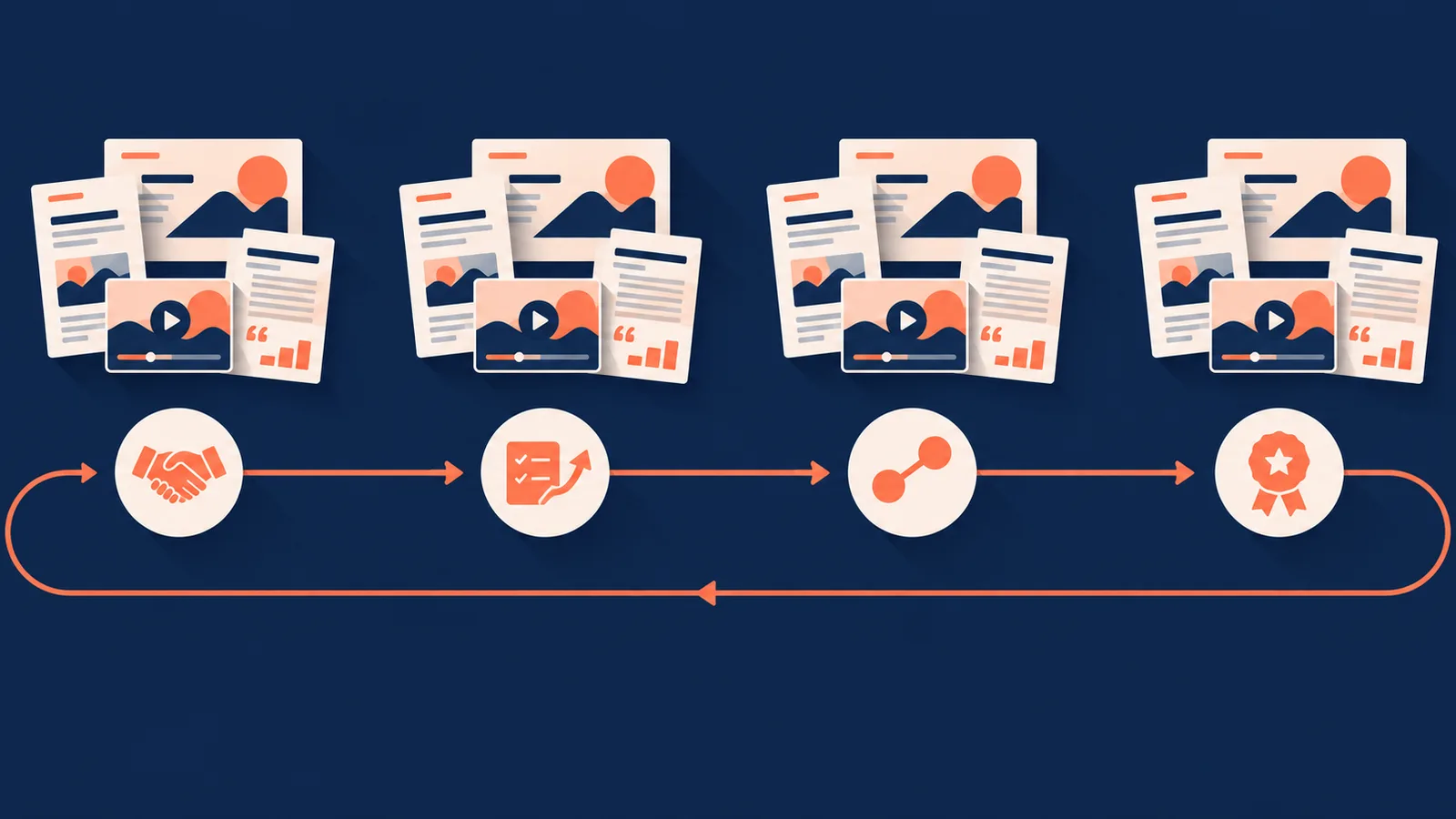
Marketing Collateral Design Services: The Whole Customer Journey
A dedicated team designs your collateral across the whole customer journey: sales, onboarding, referral, and advocacy. What it covers and how to choose one.
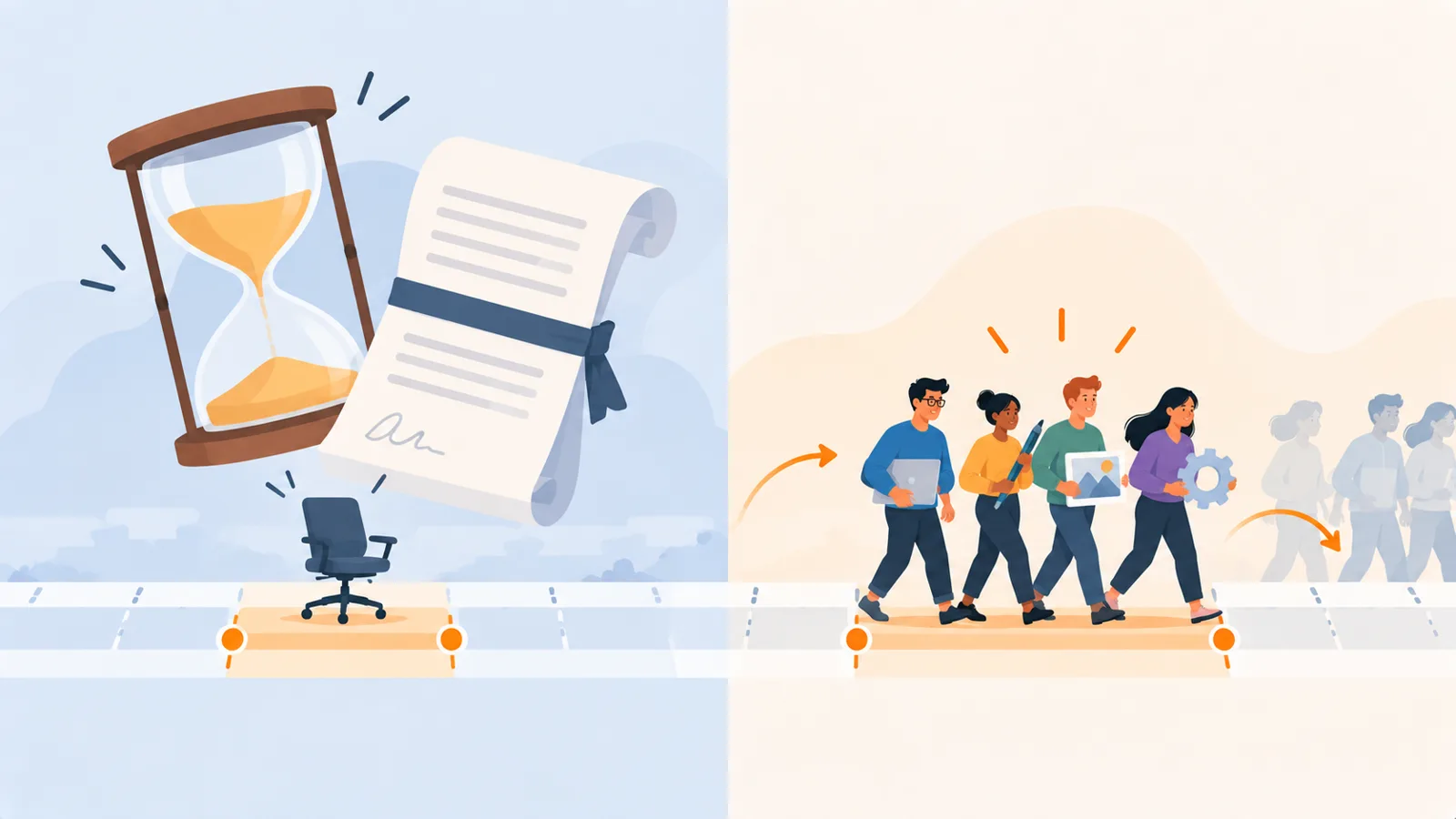
Covering a Designer’s Leave or Hiring Gap Without a 12-Month Contract
A maternity cover, a departure, or a launch needs capacity for a set period, not a permanent hire or a year-long contract. The options, and a faster way.