Signs Your Creative Production Has Outgrown Your Team
Requests outpace your team, deadlines slip, quality drifts. Here are the signs your creative production has outgrown your setup, and how to fix it.
Your creative production has outgrown your team when demand for content and design consistently exceeds your in-house capacity as a steady state, not just during campaign spikes. The signs are familiar: requests pile up faster than the team can produce them, everything is marked urgent, lead times stretch, work gets stuck in review, and your senior people spend their days on resizes and exports instead of the work only they can do.
The important part is what it means. This is rarely a sign you need one more designer; it usually means your operating model broke as the business grew. This guide covers the signs your creative setup has outgrown itself, how leaders describe the problem, and how to fix it.
What does it mean to outgrow your creative production setup?
Every creative setup is built for a level of demand. A founder and a freelancer, then a small in-house team, each works until the volume and the number of channels climb past what it was designed to carry. You outgrow the setup when the gap between what the business asks for and what the team can make stops being a busy week and becomes the normal state of things.
The tell is that the problem is constant, not seasonal. A team can absorb a launch crunch. When the backlog never clears, when every quarter starts behind, the issue is not effort or talent. The demand has outgrown the model, and no amount of working harder closes a structural gap.
What are the signs your creative production has outgrown your team?
Marketing and creative leaders report a recognizable pattern. If several of these are true at once, your setup has outgrown itself.
- Demand outpaces capacity, quarter after quarter. Both the day-to-day requests and the high-pressure moments exceed what the team can deliver, and it does not reset.
- Everything arrives urgent. Every request is marked high priority, and no one can say what got deprioritized to make room.
- Lead times stretch and turn unpredictable. Standard work takes more than two weeks from brief to publish, even when the work itself is not complex.
- Work gets stuck in review. Approved pieces sit for days waiting on one person, and feedback arrives late, conflicts between reviewers, or reopens decisions you thought were settled.
- Senior talent is stuck on production. Your best designers spend most of the week on resizes, exports, and variants instead of strategy or the high-value creative you hired them for.
- Rework and version chaos set in. The same project comes back for a fourth or fifth revision, and nobody can say which file is the current one.
- The quality-versus-speed trade-off becomes permanent. Move fast and quality slips; protect quality and deadlines slip; you can no longer hold both.
- Marketing trims ambition to fit capacity. Campaigns get scaled back or delayed because the team cannot physically make what is being asked.
None of these is a talent problem. Together they are the signature of a model that has run out of room.
How leaders describe the problem
The wording matters, because it points to the real fix. Leaders who have been through this rarely say "we need more designers." They say the workflow and operating model broke as they scaled. In their words, requests pile up faster than the team can produce them, so campaigns wait on assets and quality drops as everything gets rushed. Brand consistency slips too, because the way work is produced outgrows the way the brand is managed, and off-brand versions start appearing from every corner. And most of the team's time goes to production and process rather than strategy, which is a setup built to push out volume rather than to do the work that moves the business.
Framed that way, the answer is not simply to add people. It is to fix the system first, then add capacity where it is actually needed.
How do you fix it?
Diagnose the constraint, then redesign around it, in that order. Adding people to a broken workflow just moves the queue.
- Find the real bottleneck. Map your last ten completed requests from brief to launch and time each stage: intake, design, review, approval, delivery. The stage with the longest wait is your constraint, and it is often review, not production.
- Tighten how work comes in. Use one intake path with a required brief so nothing starts without an audience, an outcome, and a definition of done. Give one owner the call on priorities so the loudest requester no longer wins, and cap how much work is open at once.
- Standardize and reuse. Turn your most repeated asset patterns into governed templates and a searchable library, so variations come from a master asset and non-designers can produce on-brand work without pulling in the core team.
- Speed up reviews. One decision owner per request, a fixed feedback window, and clear criteria for what counts as a valid revision, to end the "I don't like it" loops.
Only then add capacity, and add it at the constraint rather than everywhere. If review is the block, fix approvals. If production volume is the block, that is where more hands belong, and for steady, ongoing demand a dedicated production team fits better than a permanent hire, because it flexes with the work instead of adding fixed cost.
How Room4 Teams gives you the capacity once the system is right
Room4 Teams is the production capacity you add when the constraint is genuinely the making of the work. You keep the strategy, the brand, and the priorities; a dedicated creative team produces the volume across graphic design, motion graphics, video, social ads, and web design and development, so campaigns stop waiting on assets. A dedicated creative project manager runs communication and quality control, and creative direction and a shared brand system hold consistency as the volume climbs, so clearing the backlog does not cost you the brand. See what we produce.
You choose how it runs. The managed service takes the briefs and returns finished work, from one team member up, on one fixed monthly fee that covers unlimited tasks, unlimited revisions, and the full tech stack: all software, all AI tools, and all the stock libraries we use. The integrated option embeds our creative production in your tools, more integrated with your team. You set priorities and approve the output; we remain responsible for our people, methods, and quality. On cost, a dedicated team runs around 45% less than the loaded cost of hiring the same role in-house (salary plus employer taxes). See pricing. The team starts within two business days, grows immediately, and reduces with one month's notice, so you scale up for a busy stretch and back when it quiets. See how it works, or read more on the design bottleneck and how to scale creative production without growing headcount. Agencies can have the team work under their own brand.
Fix the system first. Then add capacity where the constraint actually is.
Frequently asked questions
What does it mean to outgrow your creative production setup?
What are the signs your creative team is at capacity?
Do we just need to hire more designers?
How do you fix a creative production model that has outgrown the team?
When should you add an outside production team?
More on Creative Production
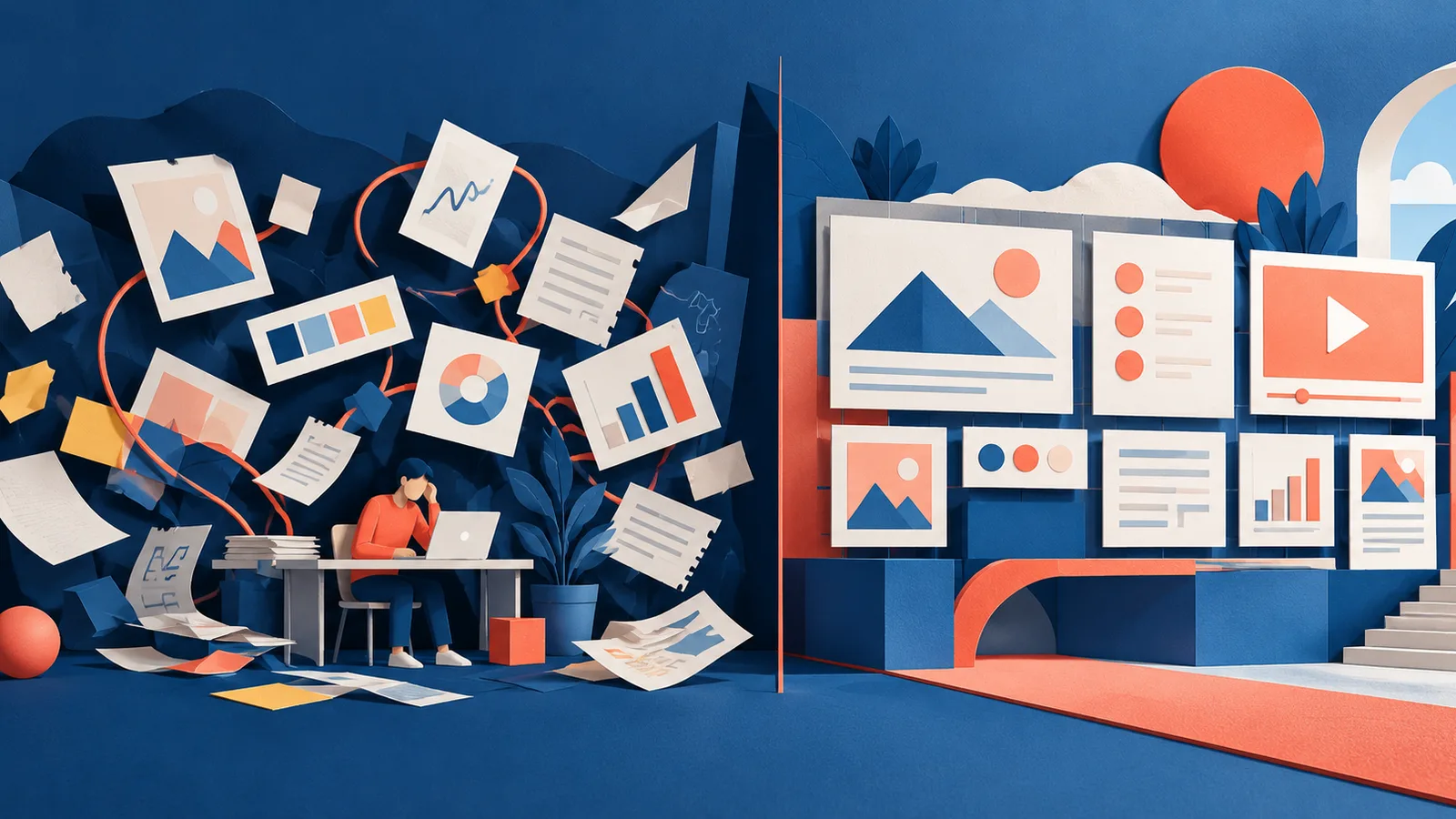
When Your Marketing Team Is Designing in Canva: What to Hand Off
DIY design in Canva and AI tools is right for some work and costly for the rest. What it really costs, what to keep in-house, and what to hand off.
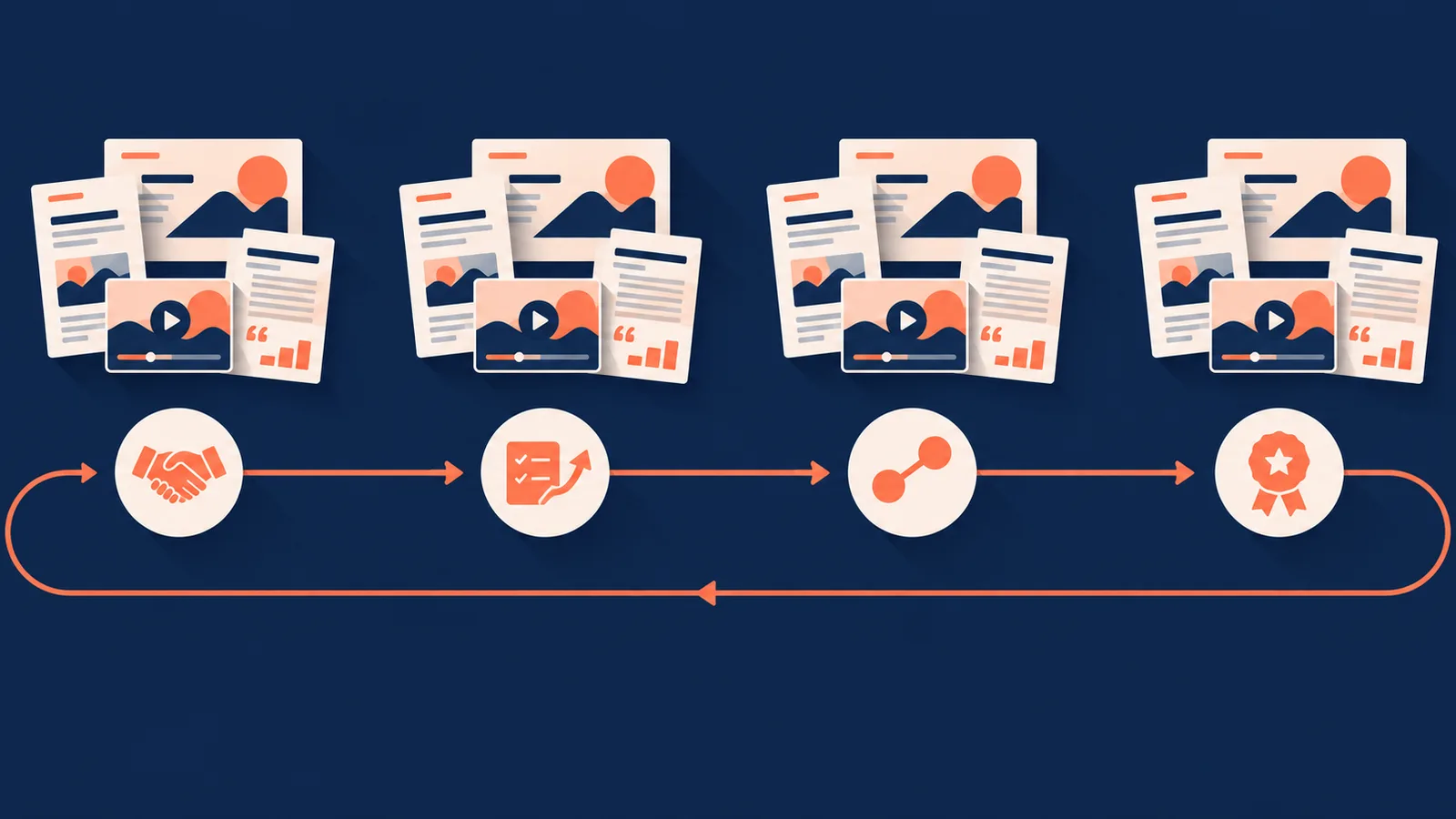
Marketing Collateral Design Services: The Whole Customer Journey
A dedicated team designs your collateral across the whole customer journey: sales, onboarding, referral, and advocacy. What it covers and how to choose one.
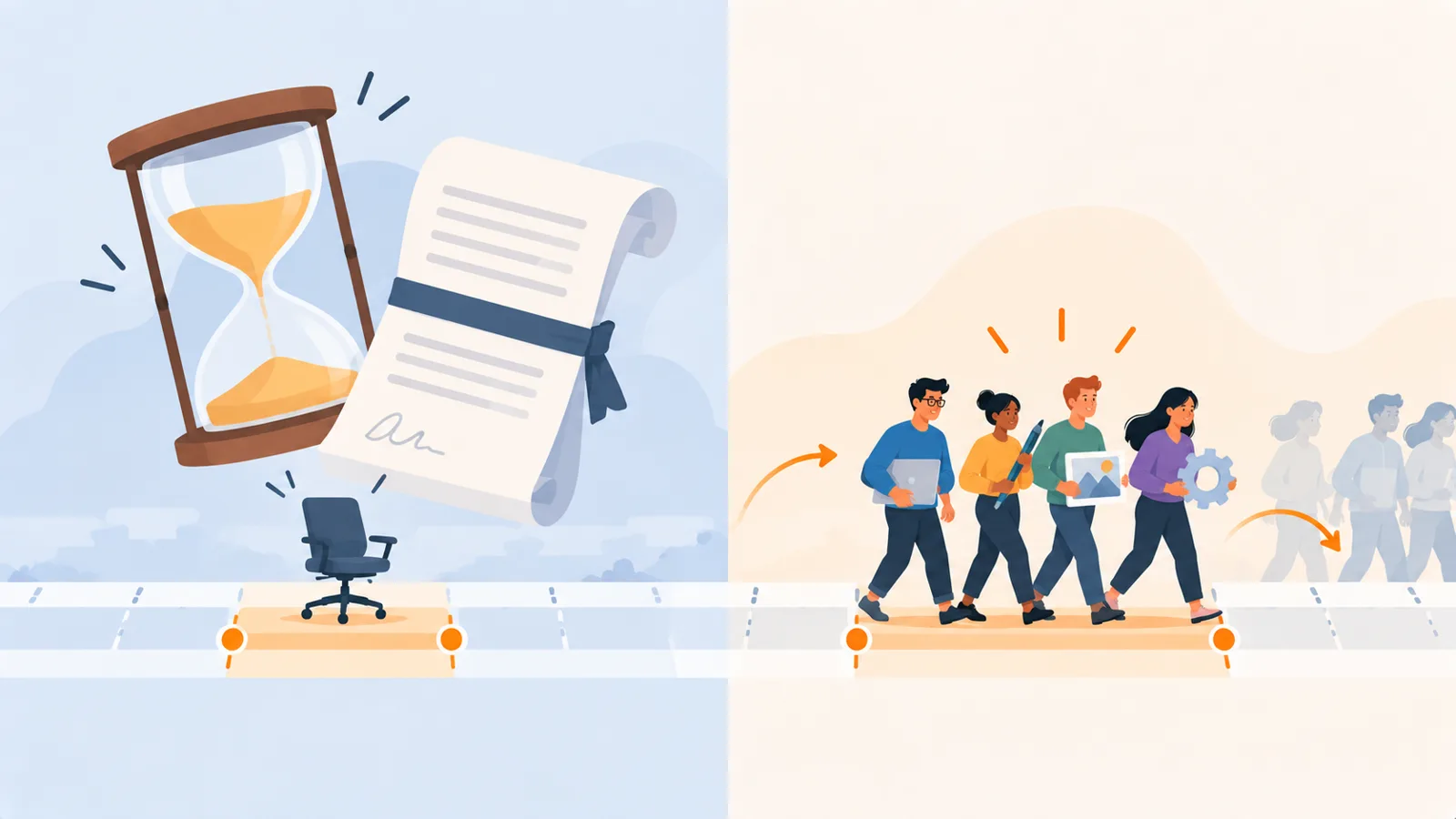
Covering a Designer’s Leave or Hiring Gap Without a 12-Month Contract
A maternity cover, a departure, or a launch needs capacity for a set period, not a permanent hire or a year-long contract. The options, and a faster way.