Creative Fatigue: What It Is and How to Fix It
Creative fatigue is when ads stop working because people have seen them too often. Here is how to spot it, fix it, and keep fresh creative coming.
Creative fatigue is the drop in an ad's performance after your audience has seen it too many times. It shows up as rising frequency, falling click-through, and rising cost per result, even when the ad was good to begin with. The usual cause is overexposure and too few genuinely different ads, and it hits B2B especially hard because small audiences reach high frequency fast. The durable fix is not a one-time refresh; it is a steady supply of fresh, genuinely different creative. That makes beating fatigue a production problem as much as a media one. This guide covers what creative fatigue is, how to spot it, and how to keep enough fresh creative in rotation to stay ahead of it.
What is creative fatigue?
Creative fatigue, also called ad fatigue, is the decline in an ad's ability to earn attention, clicks, and conversions after the audience has seen the same creative or message too often. It does not mean the ad was badly made. It usually means the audience is overexposed, the message has lost its novelty, or the budget is concentrated on too small a pool of people.
It helps to separate two things. Creative fatigue is about the ad itself wearing out. Audience fatigue is about people tiring of the brand or the message even when you show different ads. The broad term "ad fatigue" covers both, and both are solved the same way: by putting fresh, genuinely different work in front of people before the old work stops landing.
What causes creative fatigue?
The causes cluster into a few patterns, and most campaigns hit more than one.
| Cause | What happens |
|---|---|
| Repeated exposure | The same person sees the same video, image, hook, offer, or CTA again and again and starts ignoring it. |
| Too few genuinely different ads | Five ads can feel like one if they share the same opening, template, claim, and proof point. |
| Narrow audience | A small audience with a large budget reaches high frequency quickly, which is common in B2B. |
| Stale offer or landing page | The audience notices the ad but no longer finds the offer or the post-click experience compelling. |
| Channel saturation | The same ad across several platforms pushes total exposure past what any one platform reports. |
The B2B line matters. When your addressable audience is small, frequency climbs fast, so fatigue arrives sooner than it does in broad consumer campaigns. That is exactly the situation where you need more fresh creative, not less.
How do you detect creative fatigue?
Do not diagnose fatigue from frequency alone. Watch how response deteriorates as exposure builds, and read the metrics together against your own historical baselines, not a universal threshold.
The pattern to watch: frequency rising, click-through rate falling from the ad's own earlier baseline, cost per click and cost per thousand impressions climbing under stable targeting, and conversion rate slipping after it had been steady. A useful rule is to flag an ad when frequency is rising, click-through or attention has dropped materially, cost per result is worsening, the change persists across several reporting periods, and nothing major changed in your targeting, budget, offer, or landing page. Any one of those signals alone can be noise; together they are fatigue.
How do you prevent and fix creative fatigue?
By building meaningful variation and refreshing before performance falls, not after. Meaningful is the key word. Swapping a color or a headline is cosmetic; the audience still recognizes the ad. Real variation means new concepts, new hooks, new formats, and new angles on the same offer, so each piece feels genuinely different.
In practice that means a rotation of distinct creative, refreshed on a regular cadence, plus a few structural moves: broaden the audience so frequency does not spike, vary formats across static, video, and motion, and refresh the offer or landing experience, not only the ad. The teams that stay ahead of fatigue treat creative as a continuous pipeline, always producing the next batch while the current one is still running, so there is always something fresh to rotate in.
How much fresh creative do you actually need?
More than most teams produce, and on a schedule rather than in bursts. The exact volume depends on your spend, your audience size, and how fast frequency climbs, but the direction is constant: you need a steady stream of genuinely different concepts, not one hero ad and a few tweaks. Small B2B audiences burn through creative faster, so the pipeline has to keep moving.
This is where fatigue quietly becomes a production problem. A single designer or an occasional freelancer cannot sustain a rotation of fresh, distinct concepts across formats, week after week. The bottleneck is not strategy; it is capacity to produce.
Why beating creative fatigue is a production problem
You can have the sharpest media strategy and still lose to fatigue if you cannot feed it enough fresh creative. Producing several new concepts and their variations every week, across static, video, and motion, on brand, is a volume of work that in-house teams rarely have the hands for and that scattered freelancers cannot keep consistent.
That is the case for a dedicated creative team: a standing production engine that turns your briefs and angles into a continuous supply of fresh ad creative, so your paid social always has new work to rotate in before the current set fatigues. See what we produce.
How Room4 Teams keeps your ad creative fresh
Room4 Teams gives you a dedicated creative team that produces ad creative as ongoing volume: fresh concepts and variations across static, motion, and video, on brand, ready to rotate into your campaigns before performance drops. You own the strategy, the targeting, and the media buying; the team supplies the steady stream of new creative that keeps fatigue at bay.
You choose how it runs. The managed service takes the briefs and returns finished work, from one team member up, on one fixed monthly fee that covers unlimited tasks, unlimited revisions, and the full tech stack: all software, all AI tools, and all the stock libraries we use. The integrated option embeds our creative production in your tools. You set priorities and approve the output; we remain responsible for our people, methods, and quality. On cost, a dedicated team runs around 45% less than the loaded cost of hiring the same role in-house. See pricing. The team starts within two business days and flexes with one month's notice, so you can push volume during a heavy testing period and scale back after. Read more on producing social media video at volume and the design as a service model behind it.
Frequently asked questions
What is creative fatigue?
How do you know if you have creative fatigue?
What is the difference between creative fatigue and audience fatigue?
How do you fix creative fatigue?
How much new ad creative do you need to avoid fatigue?
More on Creative Production
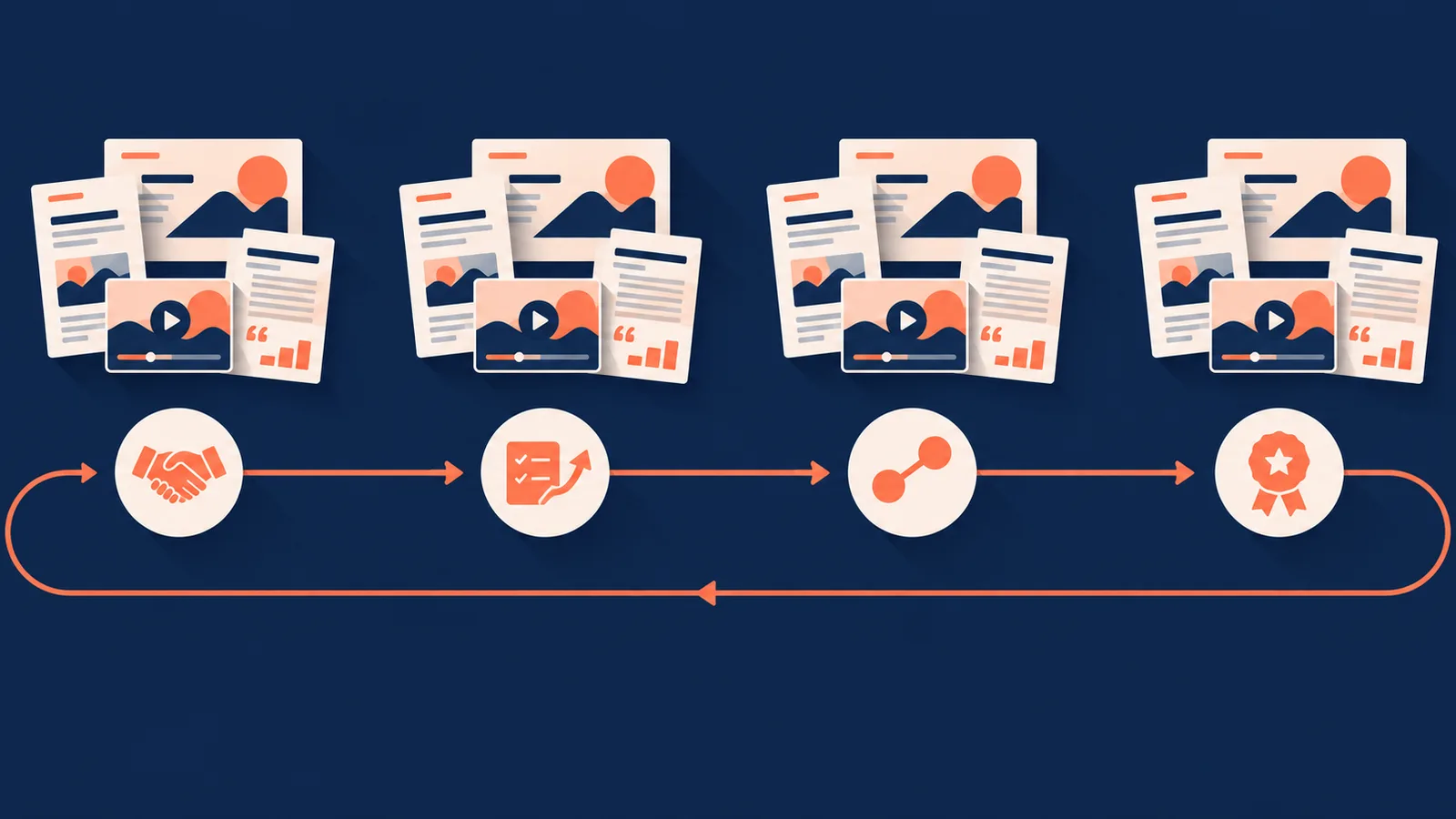
Marketing Collateral Design Services: The Whole Customer Journey
A dedicated team designs your collateral across the whole customer journey: sales, onboarding, referral, and advocacy. What it covers and how to choose one.
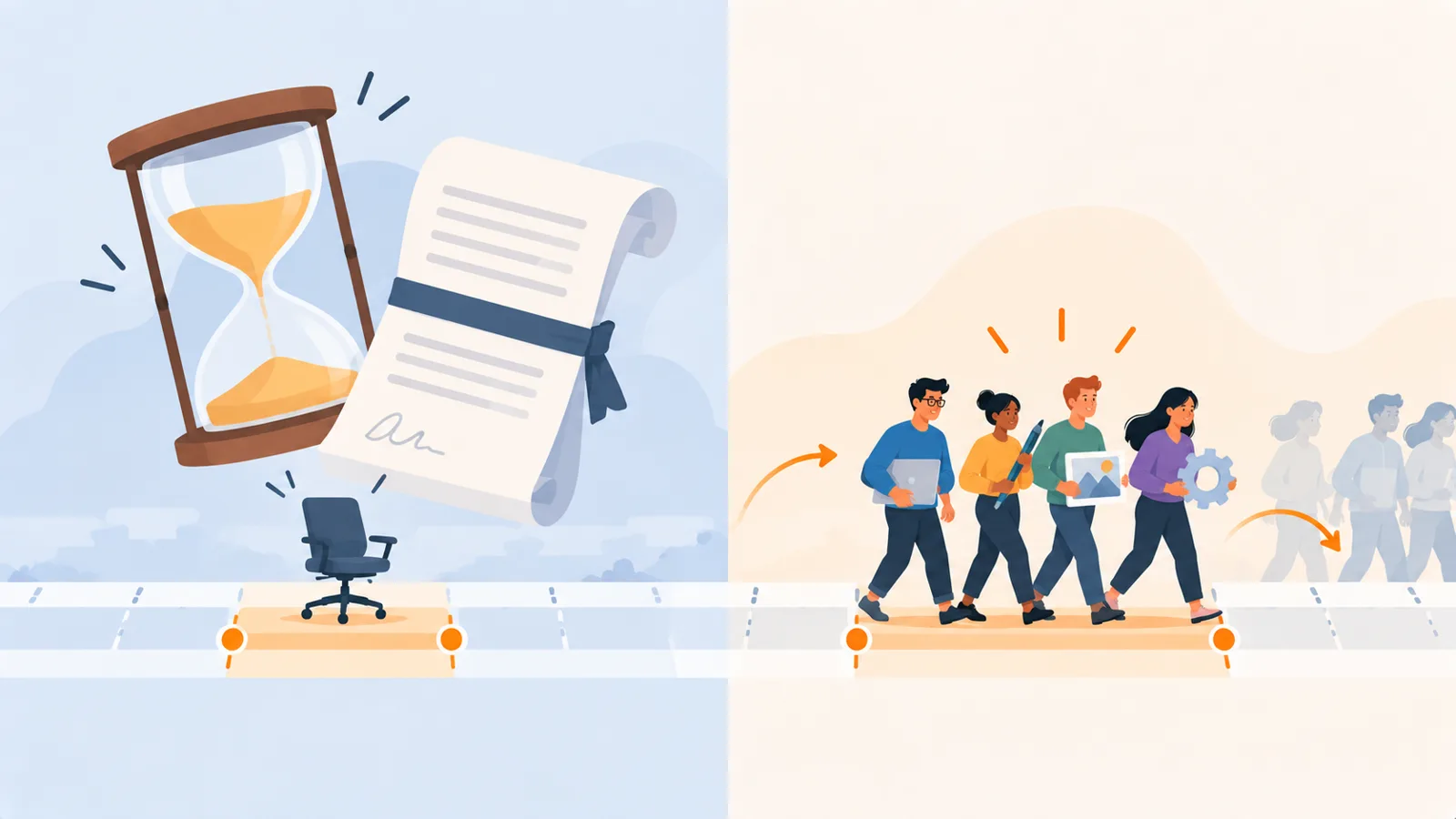
Covering a Designer’s Leave or Hiring Gap Without a 12-Month Contract
A maternity cover, a departure, or a launch needs capacity for a set period, not a permanent hire or a year-long contract. The options, and a faster way.
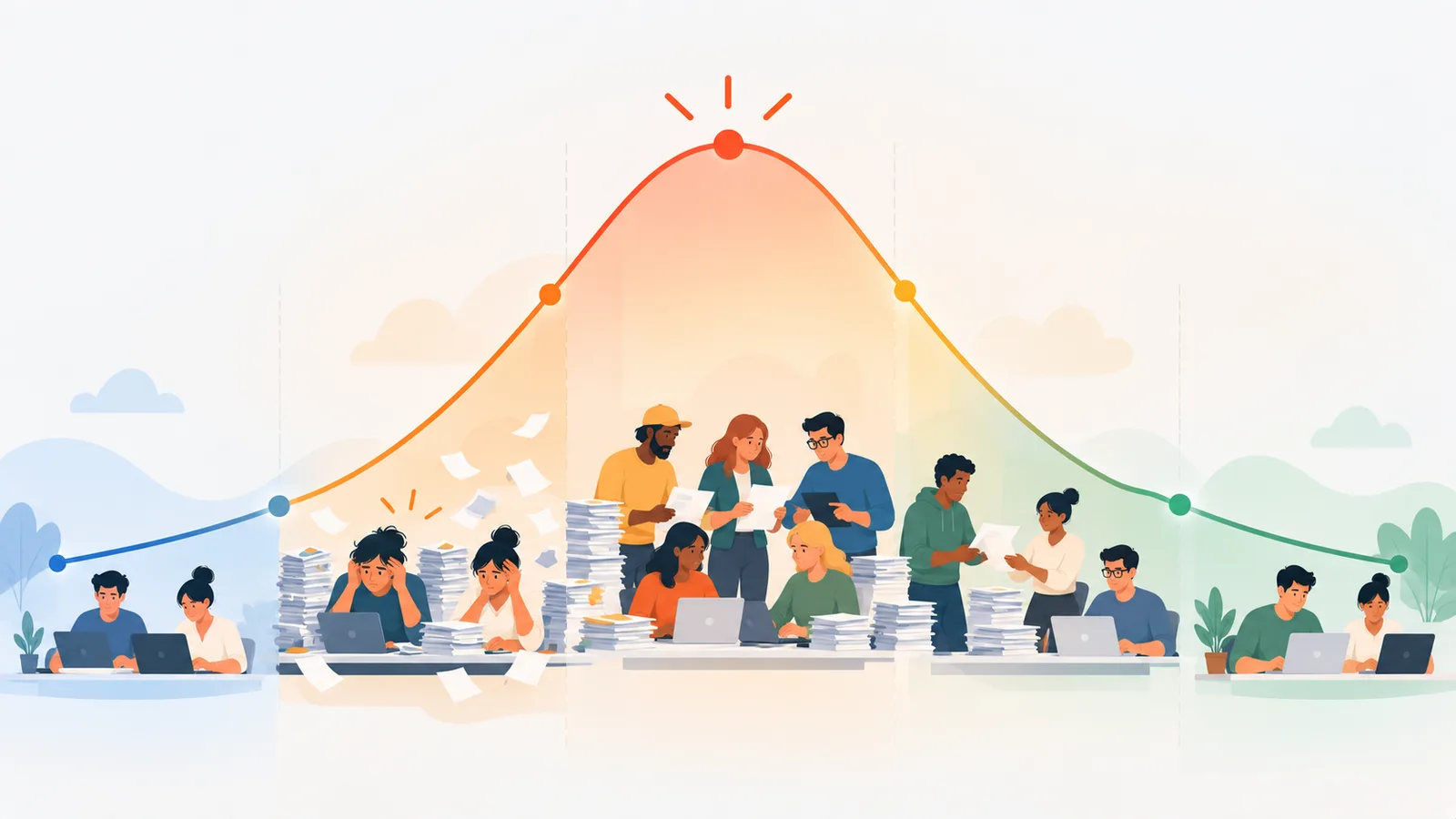
Creative overflow: handle the peaks without a freelancer scramble
Creative demand spikes then falls. Staff for the peak and you pay for idle time. Compare the overflow options and what gives capacity without a scramble.